The first time I saw it whole, I was standing on the Esplanade bridge at dusk with a paper cup of sugarcane juice going warm in my hand.
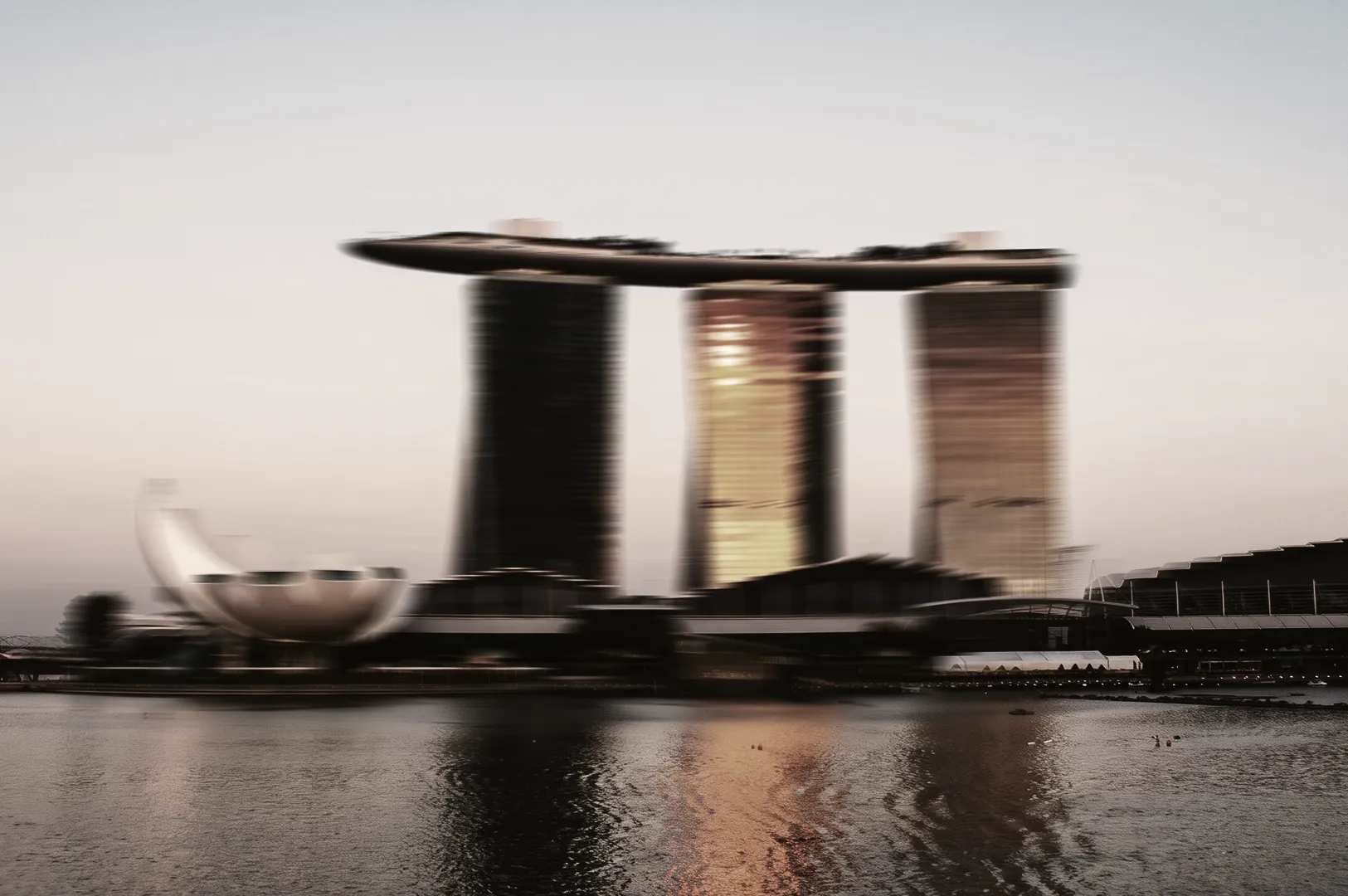
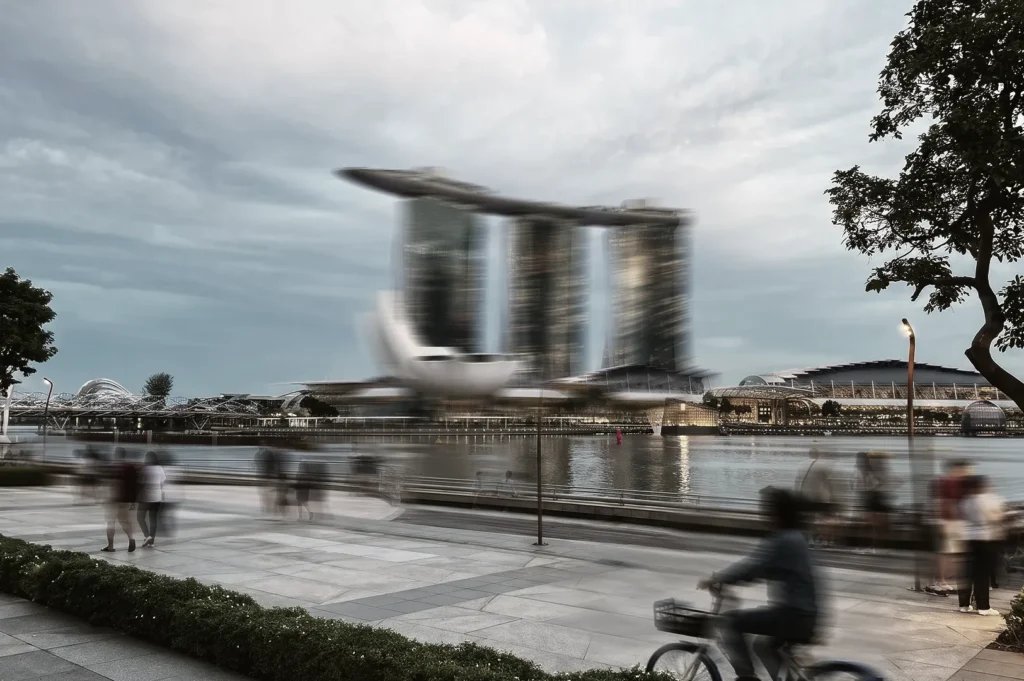
Three towers rose from the far side of the bay. Across their tops lay something long and pale, like a ship that had sailed in from the sea, lost its way, and settled gently on the rooftops to rest. The water below held a second copy of the whole thing, trembling slightly whenever a bumboat passed.
Around me, people stopped walking. A couple paused mid-argument. A delivery rider lifted his visor. Nobody said anything, but everyone looked.
Some buildings you pass. A few make you stop.
A Bay That Wasn’t Always There
It’s easy to forget that the ground beneath Marina Bay Sands was once open sea.
When I was a child, the waterfront ended much closer to the old city. The land where the towers now stand was reclaimed slowly over decades, sand poured patiently into the water until a new shoreline appeared. For years it sat mostly empty. A flat, windy stretch where kites flew on weekends and nobody quite knew what would come next.
Then, in 2010, the answer arrived.
Designed by architect Moshe Safdie, the resort opened with three towers of 55 storeys each, joined at the top by the SkyPark. You can trace the story of how Marina Bay Sands was planned and built and see how much engineering it took. The towers lean and curve. The SkyPark stretches longer than the Eiffel Tower is tall, with one end hanging out into the air with nothing beneath it at all.
It’s a building that seems to defy the very ground it stands on, which is fitting, because that ground was once the sea.
Learning a New Skyline
Every city has a shape that lives in the minds of its people. For a long time, Singapore’s shape was the row of bank towers along Raffles Place, the old colonial buildings by the Padang, and the slow curve of the river.
Marina Bay Sands changed that shape almost overnight.
At first, some people weren’t sure about it. An aunty at my neighborhood kopitiam called it “the surfboard.” My uncle said it looked like three dominoes holding up a plank. Taxi drivers joked about it the way they joke about anything new.
But slowly, the joking softened into something closer to pride. The towers began to appear on postcards, on National Day posters, in the background of wedding photos and graduation selfies. Children drew them in school with crayons, always adding the boat on top.
A building becomes a landmark when people stop explaining it and start including it.
Today, it’s hard to picture the bay without it. The skyline feels finished in a way it never did before, as if the city had been waiting for one last line to complete the sentence.
Fifty-Seven Floors of Quiet
I finally went up to the SkyPark on a weekday afternoon, long after everyone else I knew already had.
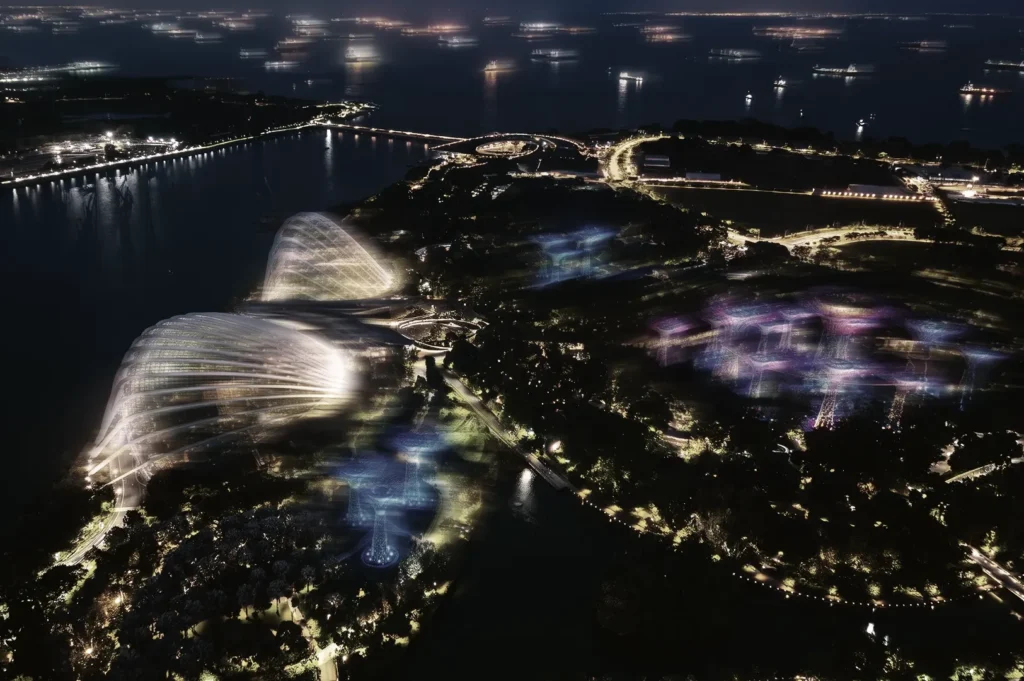
The lift climbed so smoothly I barely felt it move. Then the doors opened, and the wind found me first. It was cooler up there, cleaner somehow. Below, the city spread out in every direction. The Gardens by the Bay glowed in green clusters. Cargo ships waited in neat rows on the strait. The Singapore Flyer turned slowly, so slowly that you had to stare to be sure it moved at all.
What surprised me most was the silence.
Down on the ground, Singapore hums constantly. Traffic, construction, music from a passing car, the chirp of a pedestrian crossing. Up there, all of it dissolved. I could hear my own breathing. A child nearby whispered, as if she, too, sensed this was a place for soft voices.
If you’re curious about visiting the SkyPark and the spaces around it, you’ll find all the practical details easily enough. But no schedule or ticket captures how it feels to see your whole city at once, small enough to hold in a single glance.
From that height, the places where your life happened become tiny, and somehow more precious for it.
Light on the Water
Most evenings, the towers send light across the bay in a show of lasers, water, and music. Crowds gather along the promenade. Phones rise into the air like small glowing flowers.
I’ve watched it many times. But the night I remember best wasn’t about the show at all.
It was the evening after a long storm, when parts of the waterfront had gone dim. For a while, the usual glow faded, and the bay looked darker than I’d ever seen it. People sat closer together on the steps. Strangers started talking. Someone shared a packet of kacang puteh with the family beside them.
It reminded me of something I once wrote about the night the power went out and we finally saw each other. Sometimes the brightest places teach us the most when the lights go low. We spend so much time looking up at what dazzles us that we forget to look sideways at who’s beside us.
Old Flavors Beneath New Towers
After the SkyPark, I walked to a hawker centre near the water, the kind where plastic stools wobble and fans spin overhead with tired determination.
I ordered a plate of char kway teow and sat facing the towers. The noodles were smoky and slick with dark sauce. The towers glittered above, impossibly modern.
That contrast felt deeply Singaporean to me. We build toward the future, but we still eat the way our grandparents did. The newest skyline in the world sits only a short walk from dishes that taste exactly as they did decades ago.
I thought of how Chef Damian D’Silva keeps Singapore’s heritage flavors alive through memory, guarding the recipes of his elders so they won’t disappear. A city needs both. Towers to show where it’s going, and kitchens to remember where it came from.
What a Building Holds
My father was still sharp when Marina Bay Sands first opened. He took one look at it on the evening news and shook his head.
“Too big,” he said. “Who needs a boat on a roof?”
Years later, when his memory had begun to wander, I drove him along Sheares Bridge one night. The towers rose up ahead, lit gold against the dark.
He leaned toward the window. For a long moment, he said nothing.
Then, very softly: “Ah. Singapore.”
He didn’t remember the name of the building. He didn’t remember calling it too big. But he knew where he was. The towers had become a part of home, even for a man who had once refused them.
That’s what I think about now when I see the ship resting on the skyline. It isn’t really about the rooftop pool or the views or the engineering.
It’s about how a city learns, slowly, to recognize itself in something new, until the new thing becomes part of what we remember.