The path was still wet from the afternoon rain.
My sandals made a soft sound on it. Not quite a step. More like a breath let out slowly.
The air was thick, the way it is in Singapore after a storm. Warm and heavy. It clung to my arms and settled in the folds of my shirt. Somewhere ahead, water dripped from a leaf onto stone, once, then again.
The light was going gold.
I stopped walking. I didn’t decide to. My body simply did.
Some places slow you down before you notice it happening.
Beneath the Supertrees
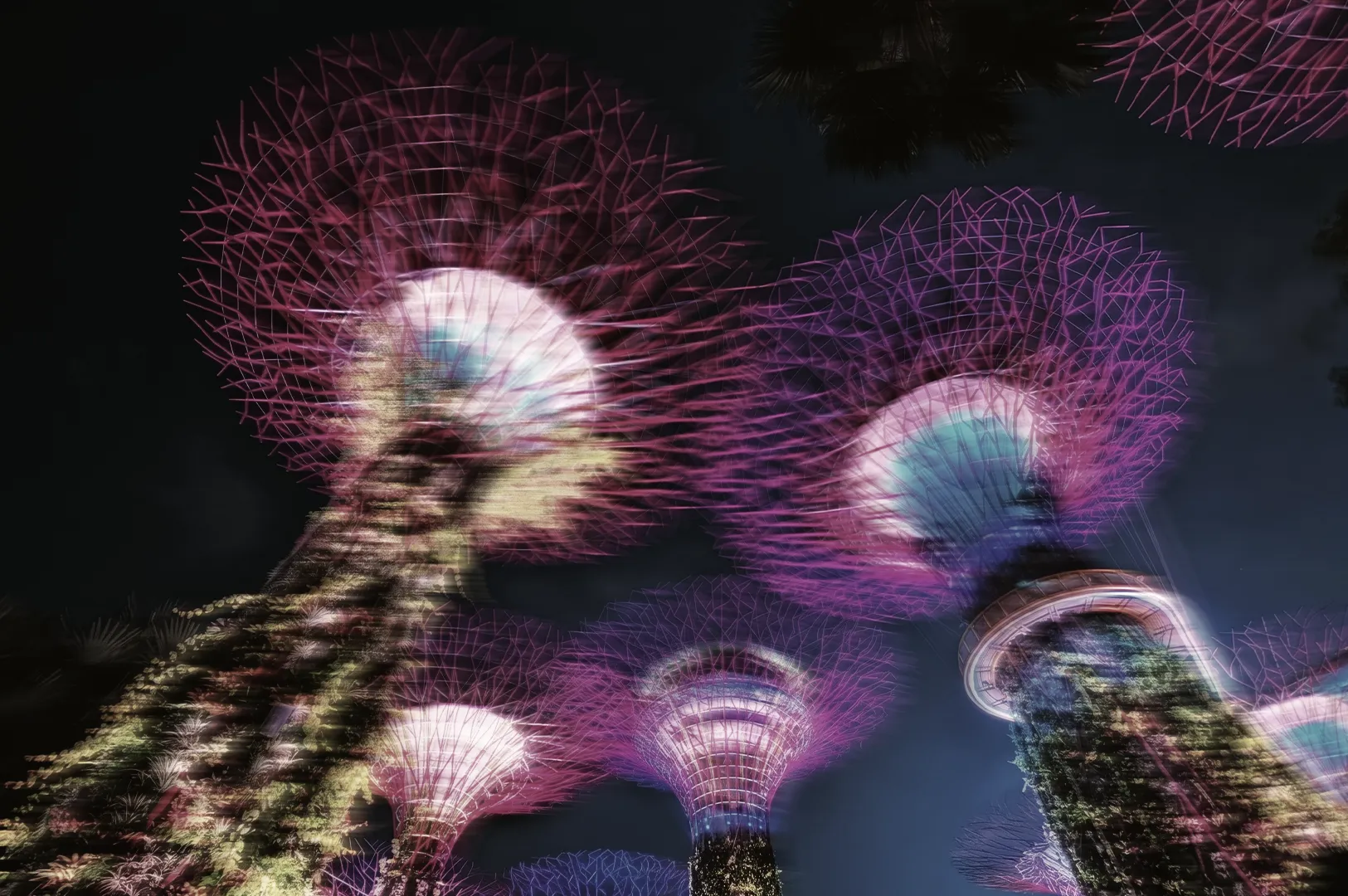
They rise out of the garden like something half-remembered.
Tall steel trunks, wrapped in ferns and orchids and climbing vines. Their tops open wide, like hands held up to catch the rain.
I have seen them in photographs a hundred times. Standing beneath them is different.
You tilt your head back. Your neck aches a little. The sky moves behind them, slow clouds turning pink at the edges.
And you feel small.
Not in a lonely way. In a quiet way. The way a child feels, sitting at a long table, listening to the adults talk late into the night.
At dusk, the lights begin. Gentle at first. Then music drifts through the grove, and people lie back on the warm ground to watch.
Nobody speaks much. A baby murmurs. Someone’s phone glows and then goes dark again.
The trees do not perform. They simply glow, and let you look.
A Garden Grown on the Sea
It is easy to forget that this land was once water.
Like much of Marina Bay, the gardens stand on reclaimed ground. Sand was placed into the sea, patiently, year after year, until there was somewhere to plant. The gardens opened in 2012, part of a long hope that Singapore could be a city held inside a garden. You can read about how Gardens by the Bay was planned and grown and the thinking behind its design.
I find it moving, that history.
Someone looked at open water and imagined shade.
Someone pictured a grandmother on a bench, a child chasing pigeons, a couple walking slowly at the end of a long week.
A garden is a promise made to people who haven’t arrived yet.
I stood there for a while, not far from the water’s edge, watching a heron pick its way along the shallows. It moved without hurry, lifting each foot as if the ground were something to be considered before trusting. The reeds beside it barely moved. A dragonfly held still in the air above them, then vanished.
I thought of all the people who had stood in this same spot and looked at this same water, each of them carrying something the garden could not name — a decision unmade, a conversation left unfinished, a name they were afraid to forget.
The garden held all of it without asking.
That is what a good place does. It doesn’t fix anything. It simply makes room.
Into the Mist
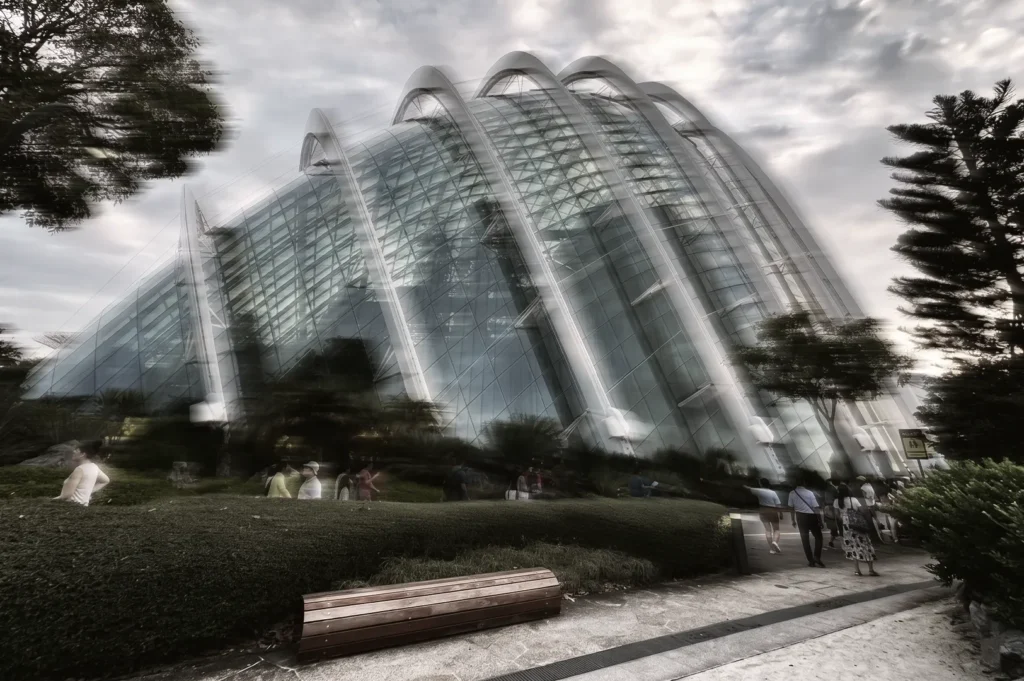
The doors of the Cloud Forest slide open, and the air changes.
Cool. Damp. Clean.
After the heat outside, it feels like stepping into early morning on a mountain. Your skin notices first. Then your breath.
A waterfall pours down from high above. Its sound fills the whole dome, steady and low. Fine spray drifts across the path and settles on your face.
I walked the upper walkway slowly. Moss grew thick on every surface. Small orchids hid between the rocks. Pitcher plants hung open, patient as cups waiting to be filled.
Below, the mist moved through the leaves like breath on a cold window.
A woman beside me closed her eyes. Just for a moment. Then she kept walking.
I understood. Some places ask you to listen before they let you see.
A Bench, a Hand, a Name
I came here with my father once, years ago.
He walked slower by then. We stopped often. At every bench, he sat and looked at the plants for a long time, without saying much.
Near the lake, he pointed at a frangipani tree.
“Your grandmother had one,” he said. “Outside the kitchen.”
He smiled at the flowers. White and yellow, soft in the late light.
I didn’t know then how much he was beginning to lose. Names. Dates. Sometimes the way home. I wrote about one of those nights in the night my father forgot my name.
But that afternoon, he remembered a tree.
The scent reached him before the words did. The memory came back through his body, not his mind.
What the mind lets go, the senses sometimes keep.
The Breeze Off the Bay
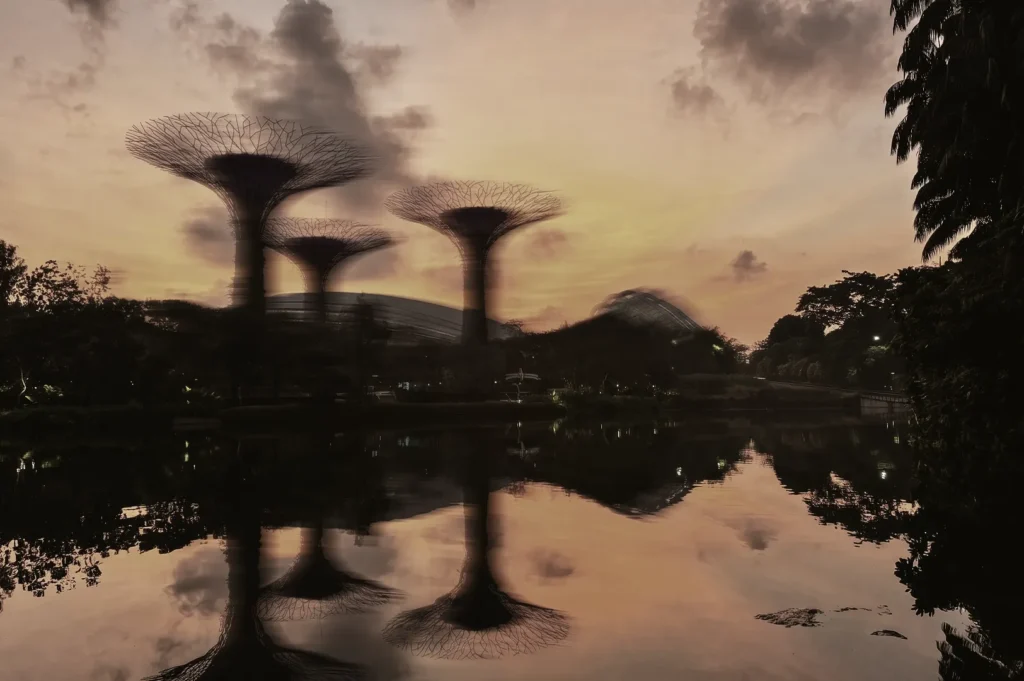
Later, I walked out toward the water.
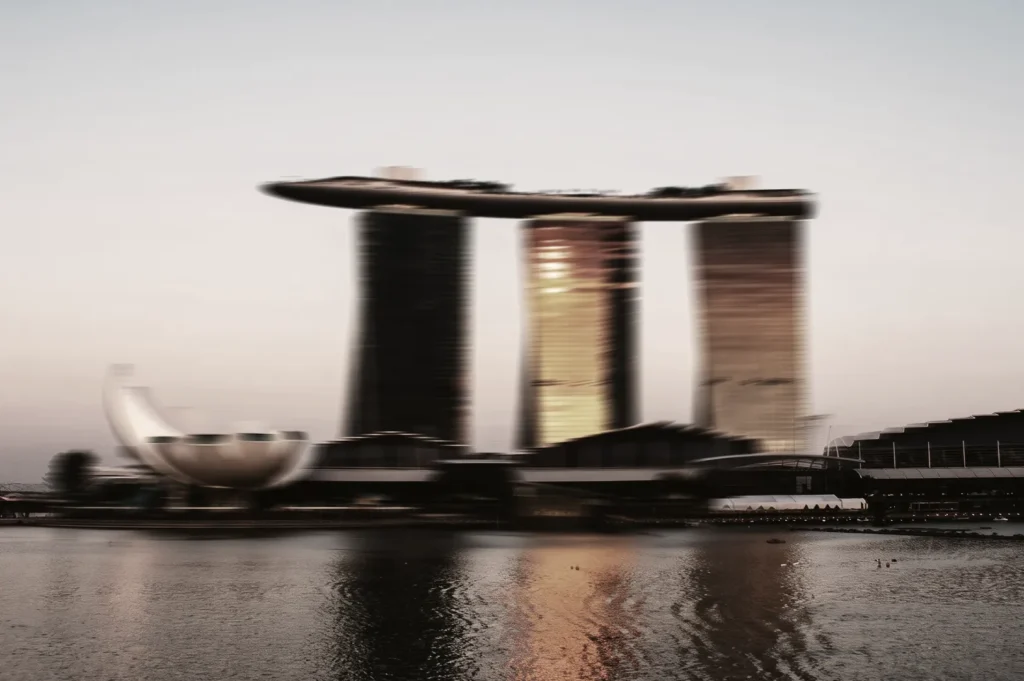
The evening wind came in from the bay, carrying salt and the faint smell of rain still drying on grass. Across the water, the hotel towers stood lit against the dark. I once wrote about that building and what it means to a city still learning to see itself in Marina Bay Sands: What the Skyline Remembers.
From here, the two places feel like neighbors.
One made of steel and glass. One made of leaves and patience.
Between them, the water holds both reflections.
Visiting Slowly
If you go, go without hurry.
Arrive in the late afternoon, when the heat begins to ease. Walk the outdoor gardens first. Let the Cloud Forest cool you as the sun sets. Then find a place beneath the Supertrees and wait for the light to change.
Practical details — opening hours, ticketing, and the evening light show schedule — are all kept on the Gardens by the Bay website.
Bring water. Wear something light. Leave the evening open.
That is where the garden really begins.
What Stays
On my way out, the Supertrees were still glowing.
The crowd had thinned. A cleaner moved slowly along the path. A couple sat on the grass, shoulders touching, saying nothing at all.
The air was cooler now. The ground had dried. My sandals made almost no sound.
I thought of my father on the bench. Of the frangipani. Of the mist on my face in the dome, cold and sudden and kind. Of the heron, lifting one careful foot.
Cities change quickly. Buildings rise. People leave. Memories soften at the edges.
But somewhere on reclaimed land by the sea, a garden keeps growing.
It does not ask you to remember everything.
Only to come back, slowly, and let it remember with you.