Raffles Hotel Singapore: Where My Parents Once Shared One Singapore Sling
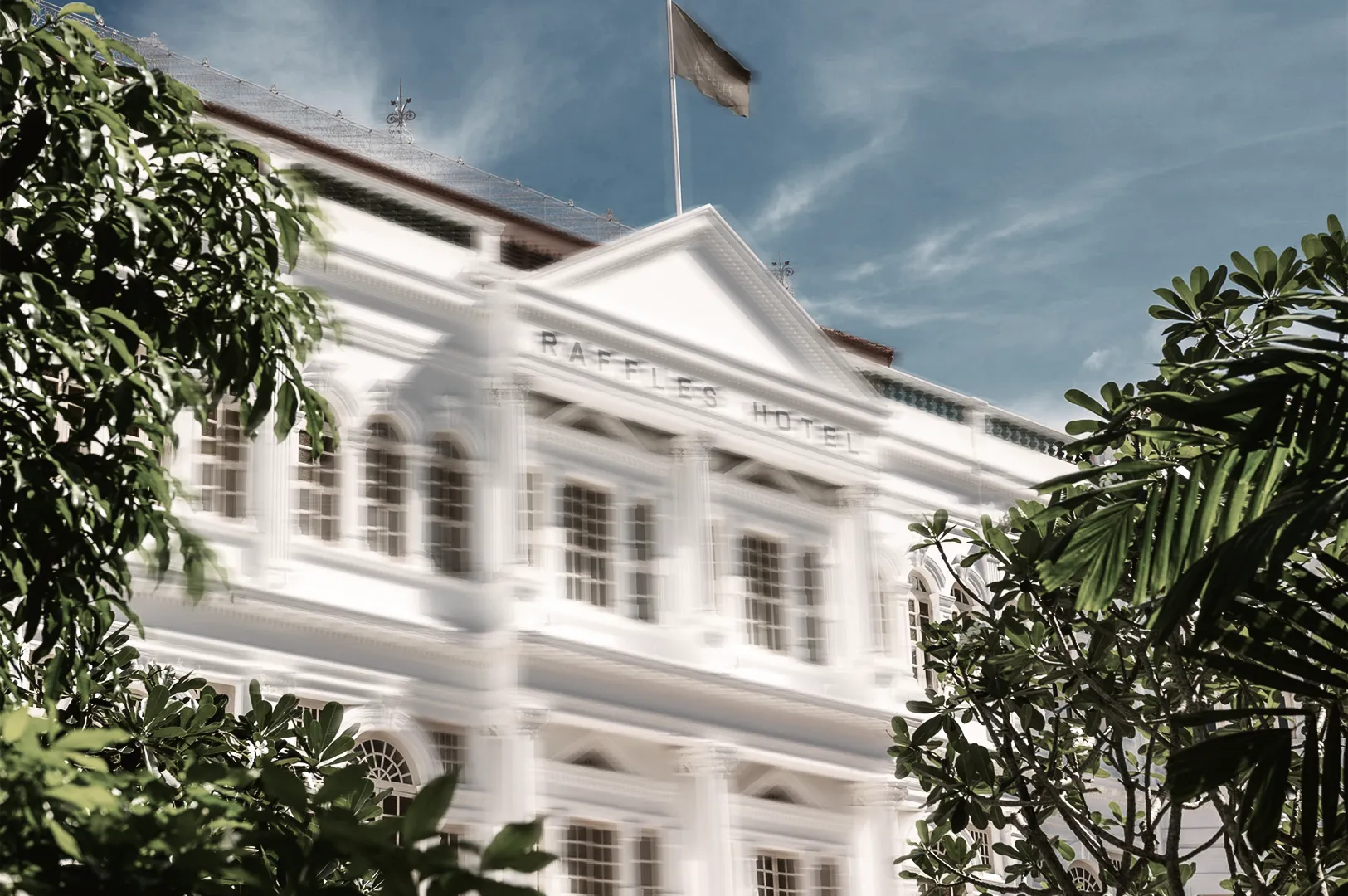
There is a moment, just past the white portico of Raffles Hotel, when the city loses its hurry.
Behind you, Beach Road is all traffic and heat. Taxis idle. Someone’s phone rings and rings. Then you step into the shade of the entrance, and the noise seems to fold itself up and stay outside, like a coat left at the door.
The ceilings rise high above you. Fans turn slowly overhead, pushing the warm air around with no urgency at all. The floors are cool and polished. Everything is white, the deep and patient white of old plaster that has been painted again and again for more than a century.
I stood there longer than I meant to. I had come to take one photograph. I ended up staying the whole afternoon.
Some buildings are grand. A rare few are also gentle.
A Photograph on the Bookshelf
At my parents’ home, there is a small photograph tucked into the corner of a bookshelf frame.
It shows a young couple standing in front of a white building. My mother is squinting into the sun, one hand shading her eyes. My father stands very straight in a borrowed tie, trying hard to look like a man who belongs somewhere expensive.
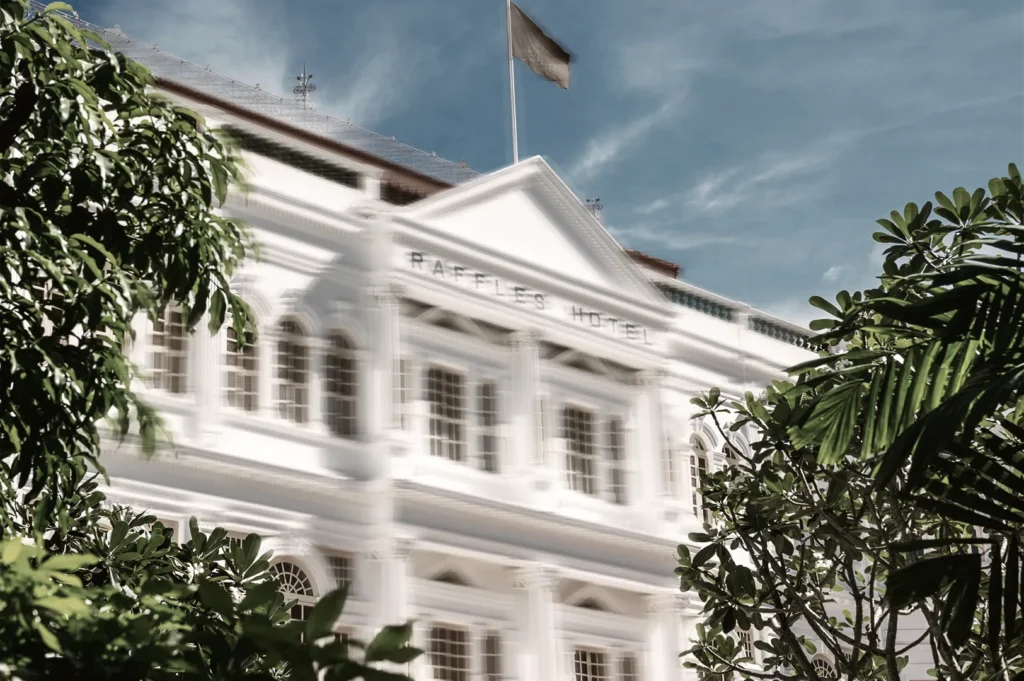
Behind them is the famous facade of Raffles Hotel.
It was their first wedding anniversary. They had saved for weeks. Not for a room, which was far beyond them, but for one drink at the Long Bar.
“One Singapore Sling,” my mother told me once, laughing. “Two straws. Your father counted the money twice before he ordered.”
I was a teenager when she told me that story. I remember thinking it was a little sad. Now I think it might be the most romantic thing I know about them.
Ten Rooms and a Long Memory
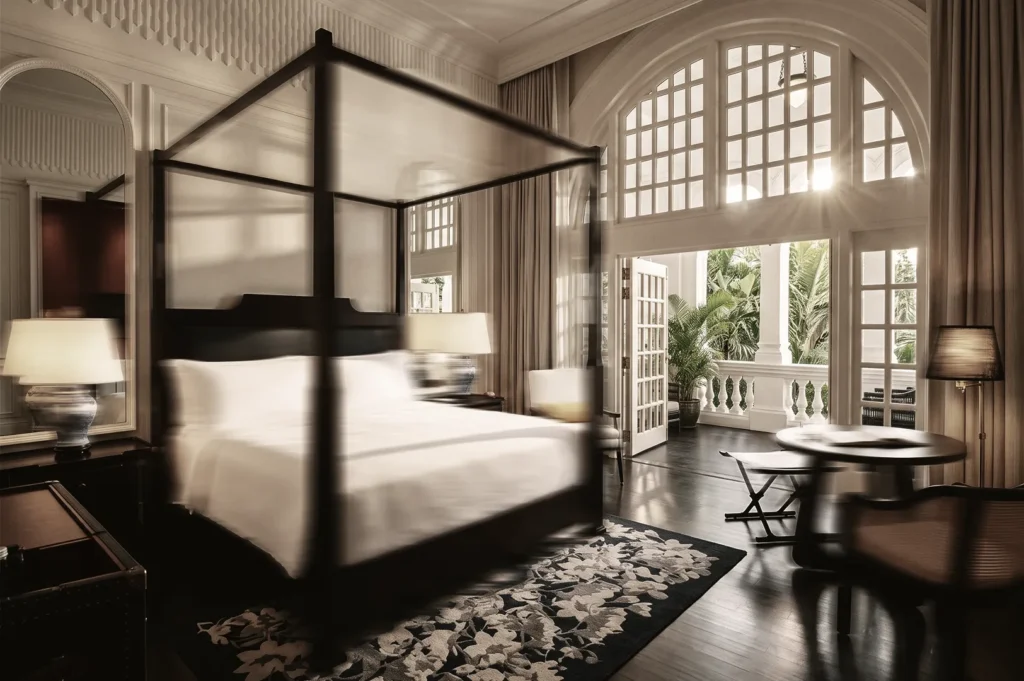
Raffles did not begin as a legend.
In 1887, four Persian-Armenian brothers named Sarkies opened a modest hotel with just ten rooms in a colonial bungalow near the sea. Singapore was a busy port then, full of ships and merchants and travelers passing through on their way somewhere else.
The brothers saw something in those travelers. They needed more than a bed. They needed a place to rest, a place that felt like arriving.
Over the years, the hotel grew. Wings were added. Verandahs stretched out. Writers came and stayed and wrote about it. Dignitaries, actors, and wanderers passed through its doors. You can trace the history of Raffles Hotel from its humble 1887 beginnings to the landmark it is today, and it reads almost like a novel. Wars, restorations, celebrations, and quiet decades in between.
But walking its corridors, I didn’t feel the weight of famous names.
I felt the weight of ordinary ones.
Every grand building is mostly made of small visits.
The Long Bar
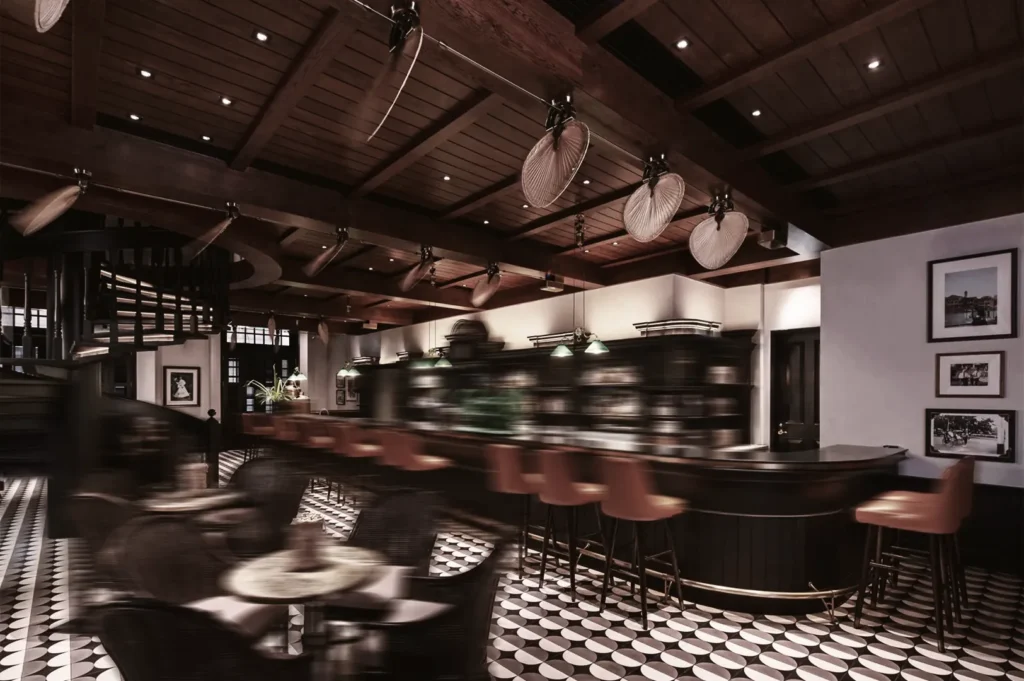
I went to the Long Bar first, because of the photograph.
It’s darker inside than you expect, cooler, with wooden fittings and woven ceiling fans that sway gently like palm leaves. Burlap sacks of peanuts sit on every table. And on the floor, crunching softly underfoot, are the shells.
You’re allowed to drop them there. You’re meant to. It’s one of the few places in Singapore where tidiness takes a holiday.
I ordered a Singapore Sling.
It arrived tall and pink, the color of a sunset that’s been sweetened. Gin, cherry, pineapple, something bright and citrusy underneath. The Singapore Sling is widely believed to have been created at Raffles around 1915 by bartender Ngiam Tong Boon, who wanted to give guests something cheerful and a little bit daring.
I took one sip and set it down.
Then I asked for a second straw.
The bartender didn’t ask why. He simply placed it beside the glass, the way someone does when they understand that some orders aren’t really about the drink.
I sat with that glass for a long time, cracking peanuts, listening to the shells fall.
The Courtyards Where Time Slows
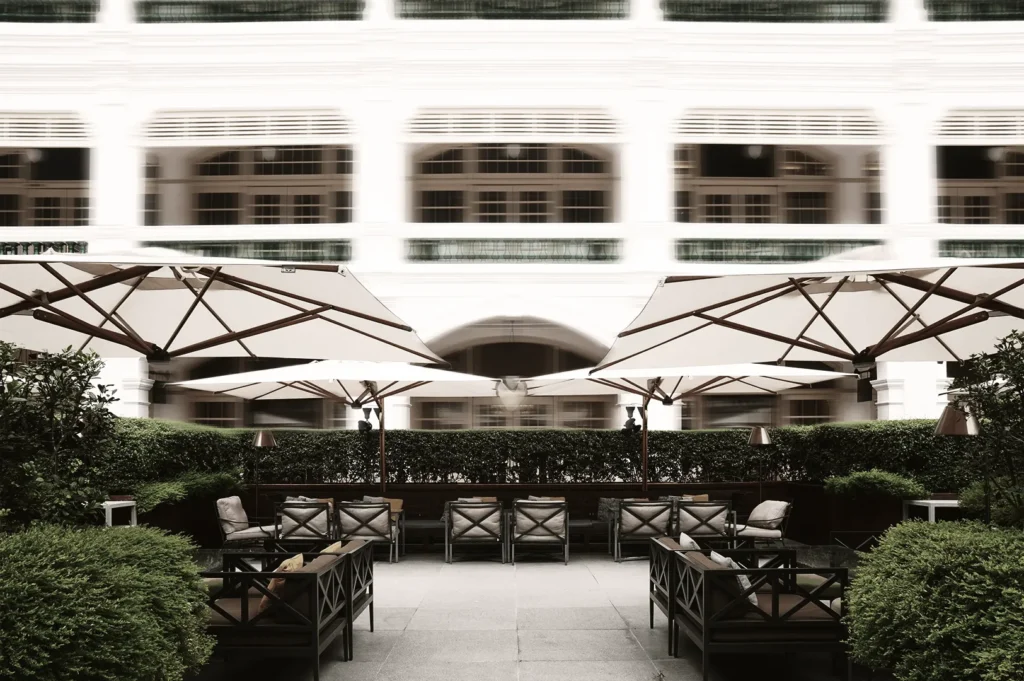
Later, I wandered out into the courtyards.
This is the part of Raffles I love most. The open spaces between the white wings, where the sky shows through and the heat softens into shade. Wide lawns. Tall palms. Wooden benches that seem placed for people who have nowhere else to be.
And the frangipani trees.
They grow here with an easy kind of grace, their branches crooked and pale, their flowers white with yellow hearts. Some had fallen onto the grass and the stone paths. They lay scattered like small, forgotten notes.
The scent was faint and sweet, almost shy. You had to stand still to notice it.
An elderly couple sat on a bench nearby, not speaking. The man held a folded newspaper he wasn’t reading. The woman watched a bird hop across the lawn. Every so often, she reached over and brushed something invisible off his sleeve.
I wondered how many times they’d been here. I wondered if they had a photograph too.
Some places hold the people who visit them. Others hold the way they love each other.
What My Father Remembers Now
My father doesn’t come out much anymore.
His memory has been drifting for a few years now. Some days he’s sharp and funny, correcting my grammar and complaining about the news. Other days, he looks at me with polite kindness, the way you’d look at a stranger who seems familiar. I’ve written before about the night my father forgot my name and how shared stories slowly brought us back to each other.
That’s why I came to Raffles alone.
I wanted to bring him something. A photograph of the same white facade, taken from the same spot, so he could hold the two pictures side by side.
I found the spot, or close to it. A uniformed doorman stood nearby and, without being asked, stepped out of the frame. He smiled when I thanked him.
“Many people come back to take the same picture,” he said. “Their parents. Their grandparents. Always the same corner.”
I took the photograph. Then, before I left the courtyard, I bent down and picked up one fallen frangipani flower. I wrapped it in a napkin from the Long Bar and put it carefully in my bag.
The Flower on the Table
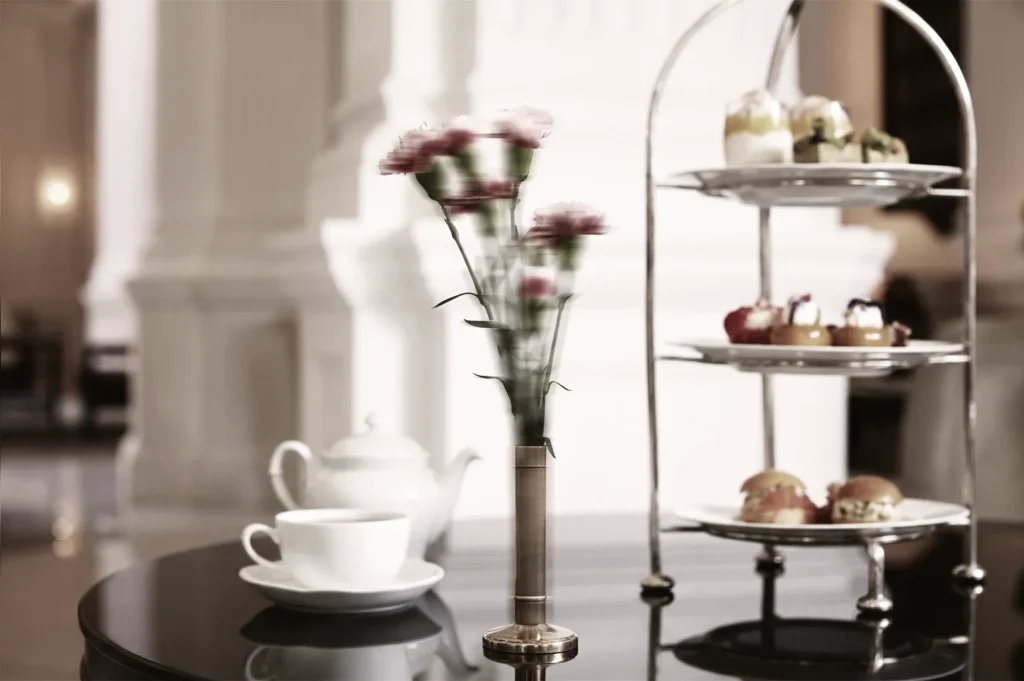
That evening, I sat with my father at his kitchen table.
I showed him both photographs. The old one, faded and soft at the edges. The new one, sharp and bright on my phone. He looked from one to the other for a long time.
“Same building,” he said finally.
I nodded.
He didn’t say anything about my mother. I wasn’t sure if he recognized her in the picture. I didn’t push.
Then I unwrapped the napkin and set the frangipani flower on the table between us.
He leaned forward slowly. He picked it up with two careful fingers and brought it close to his face. He closed his eyes.
“She wore one behind her ear,” he said quietly. “That day. She picked it up from the grass. I told her it wasn’t allowed. She laughed at me.”
I didn’t know that. My mother never told me.
He kept the flower in his hand until it was time for him to sleep.
There are evenings like that one — quiet, unplanned, lit only by what surfaces between two people when the world goes still — that end up meaning the most.
What the Building Holds
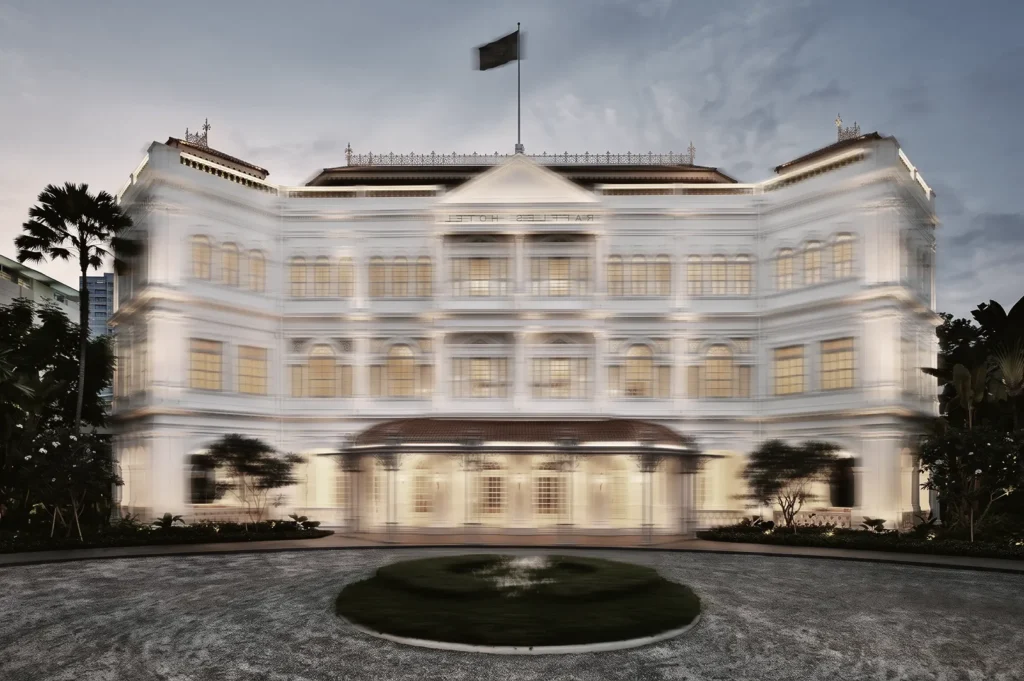
Raffles Hotel is more than 135 years old now. It has outlived the brothers who founded it, the ships that brought its first guests, and the city that once surrounded it. It has been restored, renewed, and repainted. It will probably outlive all of us.
But I don’t think its real history is in the record books.
It’s in a borrowed tie. Two straws in one glass. A shell crunching under a young man’s shoe. A flower tucked behind a laughing woman’s ear, against the rules.
These are the things a building like this quietly keeps. Not because anyone asked it to. Simply because it stayed still long enough for us to leave them there.
I’ll go back someday with my father, if his good days allow it. We’ll sit in the courtyard. We’ll order one Singapore Sling.
Two straws. No hurry. The fans turning slowly overhead, as they always have.