The Night the Power Went Out, We Finally Saw Each Other
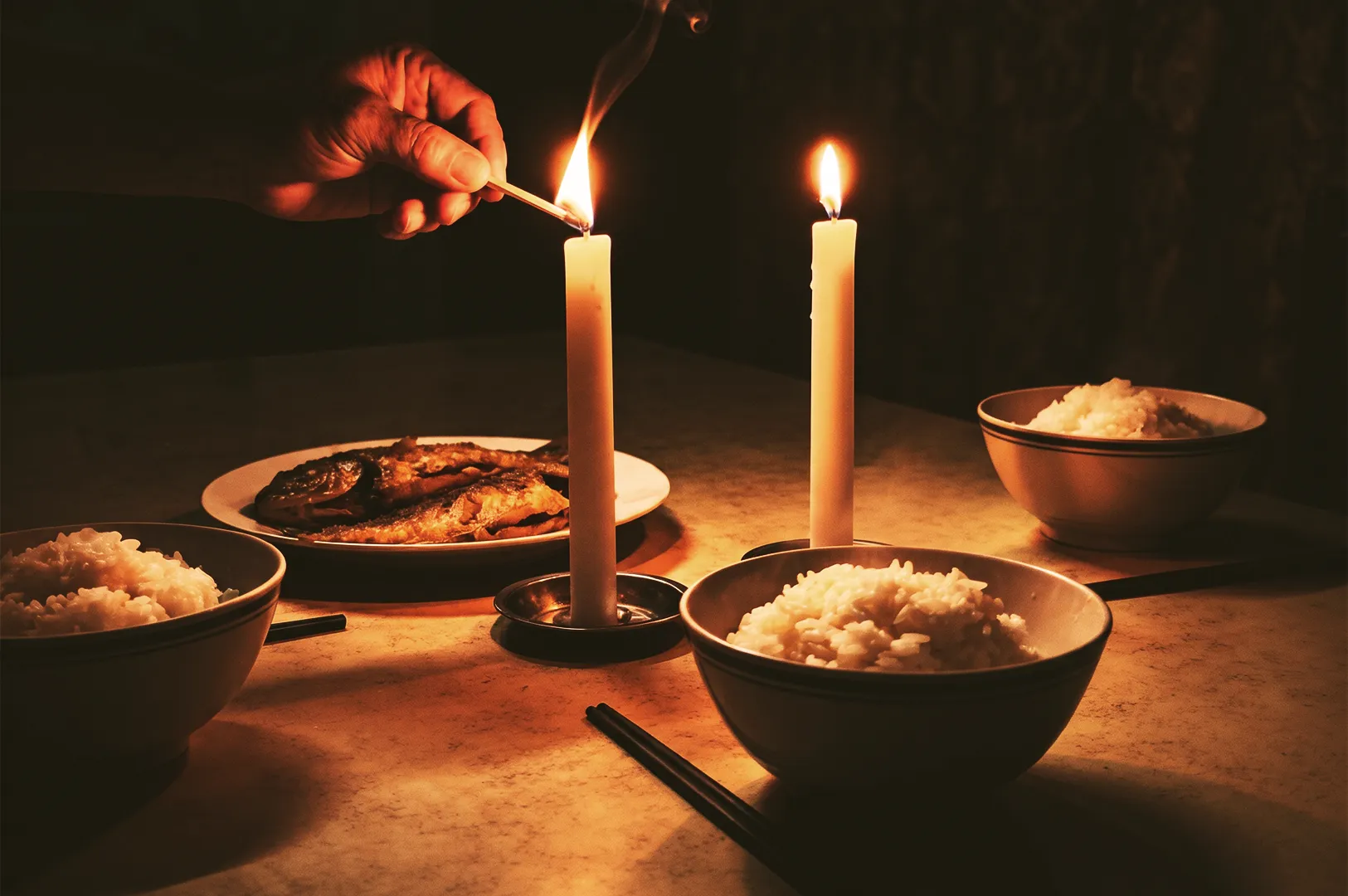
It was a Sunday in late August. The kind of heat that sat on your shoulders and wouldn’t move.
We had just set the table. Rice steaming in the pot. A plate of fried fish, still crackling. My father pulling out his chair with that small grunt he always made.
Then the lights went out.
The fan stopped mid-turn. The fridge went quiet. For a second, nobody spoke. It was as if the house itself was holding its breath.
My mother said nothing. She simply stood, walked to the drawer by the stove, and came back with two white candles and a box of matches.
That was the night I learned that light has a language, and most of us never stop long enough to hear it.
The Table Before the Dark
Our dinners were usually loud and lit too brightly.
A single bulb hung over the table, bare and yellow, humming faintly. It lit everything the same way. The chipped bowls. The stain on the tablecloth. My brother’s homework, which he hid under his plate.
Under that bulb, we ate quickly. We talked over each other. Someone was always half-watching the television in the next room.
I don’t remember many of those meals. They blur together, like photographs taken too often.
But I remember the one with candles.
Two Flames and Six Faces
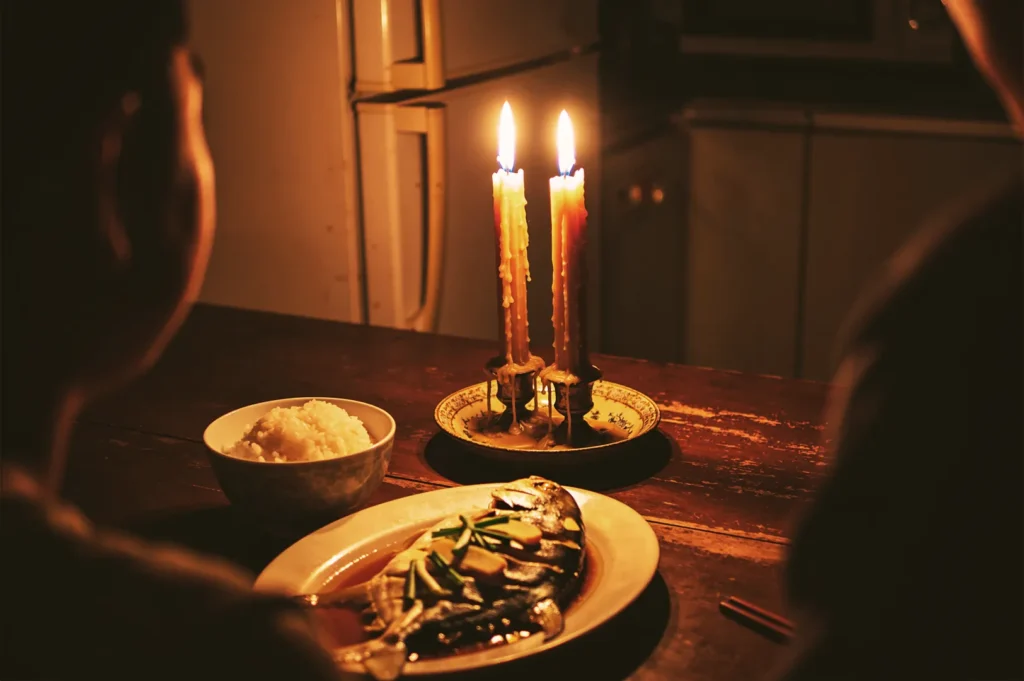
My mother lit the first candle and let wax drip onto a saucer, then pressed the candle into it. She did the same with the second. She set them in the middle of the table, between the rice and the fish.
And the room changed.
The walls disappeared. The television was gone. The kitchen shrank to a small circle of gold, and we were all inside it.
I looked across the table and saw my father’s face as if for the first time. The candlelight caught the lines around his eyes. It settled into the grooves of his forehead. He looked older than I thought he was. Softer, too.
My grandmother sat at the end, her hands folded. The flame reflected in her glasses, two tiny fires where her eyes should be. She was smiling at nothing in particular.
In bright light, you see everything. In low light, you see what matters.
Why We Spoke Differently
Something happened to our voices that night.
We spoke more quietly. Nobody rushed. My brother, who never said much at dinner, told a long story about a boy in his class who had brought a live crab to school. My father laughed so hard he had to put his spoon down.
My grandmother told us about the house she grew up in, where there was no electricity at all. Every evening ended like this, she said. A lamp. A table. Whoever was home.
“We didn’t have much,” she said. “But we always had each other’s faces.”
I didn’t understand what she meant then. I think I do now.
Years later, I came across the idea of how warm evening light affects our body clock and helps us slow down. Our bodies read dim, golden light as a signal that the day is ending. We settle. We soften.
That made sense to me. But it didn’t explain everything.
Some of it, I think, was simpler. When the room gets dark, the only thing left to look at is each other.
The Food Tasted Like Something Else
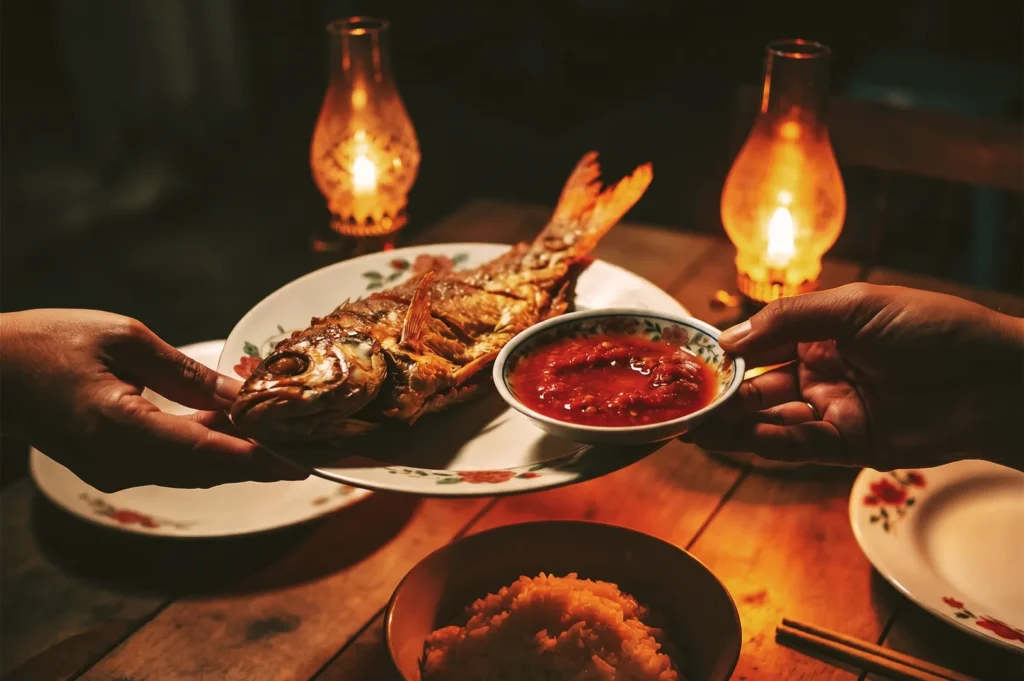
I have eaten fried fish a thousand times since. It has never tasted quite like that.
The skin was crisp and salty. The rice was a little too soft because my mother had left it on the heat while she searched for matches. The chili sauce sat in a small dish, glowing red, catching the flame.
We ate slowly because we had to. We couldn’t see well. We passed dishes carefully, hand to hand.
Maybe that’s what made it taste better. Not the fish. The care.
When the Lights Came Back
The power returned just after nine. The bulb flickered once, then snapped back to full brightness. The fan started turning. The fridge hummed.
Everyone blinked. My brother groaned.
My father reached over and turned the switch off again.
Nobody asked him why. We just kept sitting there, in the candlelight, until the wax burned low.
What the Light Still Says
My father has been gone for some years now. My grandmother, longer.
But on some evenings, when dinner feels too rushed and the room feels too bright, I turn off the overhead light. I light a candle. Sometimes two.
My children think it’s strange. My daughter once asked if the power had gone out.
“No,” I told her. “I just want to see you properly.”
It’s one of the quiet habits I’ve come to write about in our reflections on the slow rituals that bring families back to the dinner table. Not because it’s special. Because it’s small, and small things are the ones we forget.
Two flames. A plate of something warm. The faces of the people you love, lit gently from below.
That’s all the table ever needed.
The rest was just noise, and a bulb humming too loudly overhead.