We often imagine preserving memories as a project for later.
One day, we will label the photographs.
One day, we will ask Dad about his first job.
One day, we will finally write down the story Mum always tells about the summer she left home with one suitcase.
Then life continues.
There are appointments, meals, errands, work, medications, laundry, and ordinary tired evenings. The questions remain unasked because they never seem urgent enough.
Until suddenly they do.
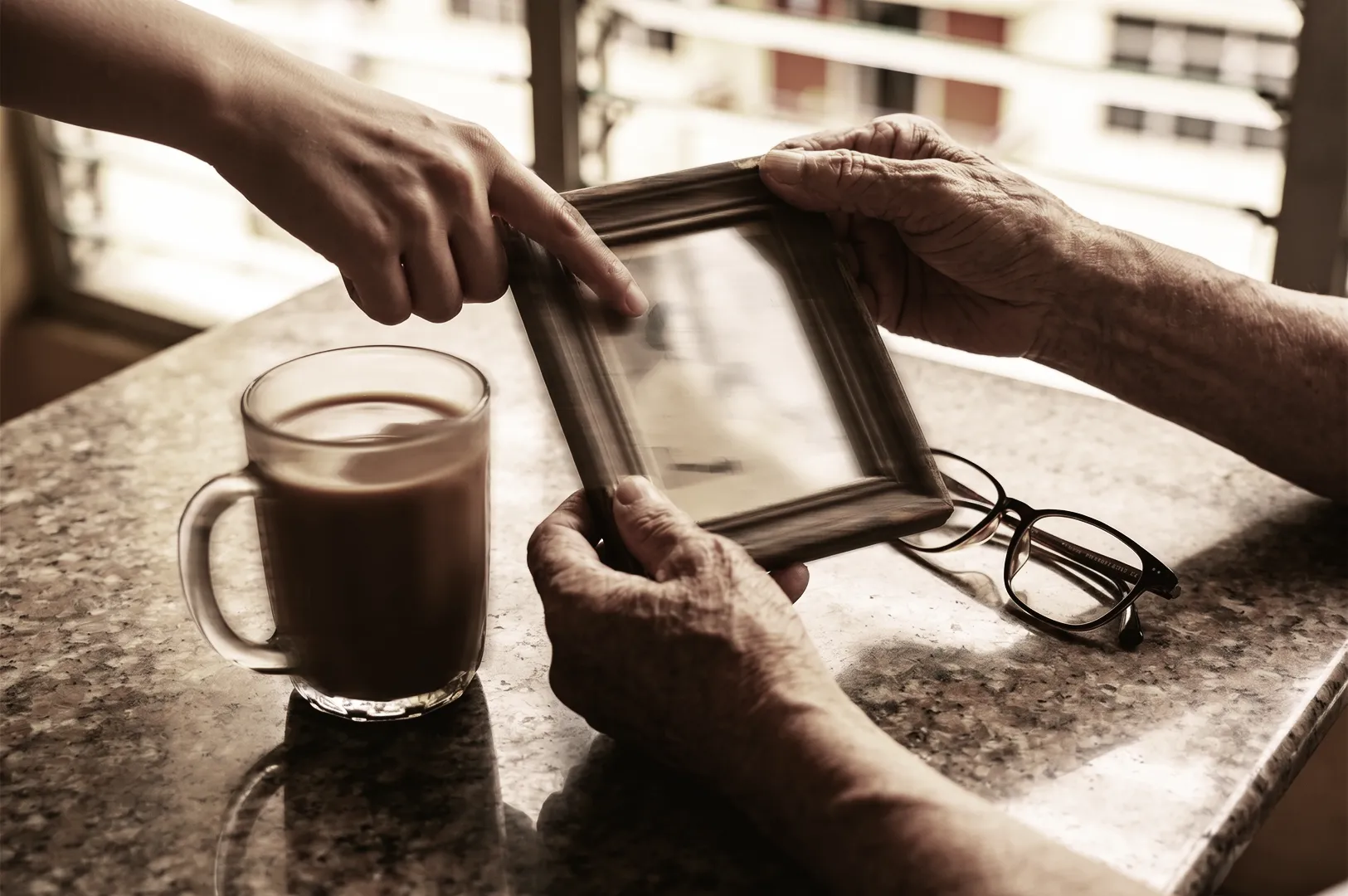
Creating memory moments with an aging parent does not require an elaborate family-history project. It can begin with ten quiet minutes, one photograph, and enough patience to let the conversation go wherever it wants.
Start Smaller Than You Think
A large box of family photographs can be overwhelming.
So can twenty questions about someone’s childhood.
Begin with one thing.
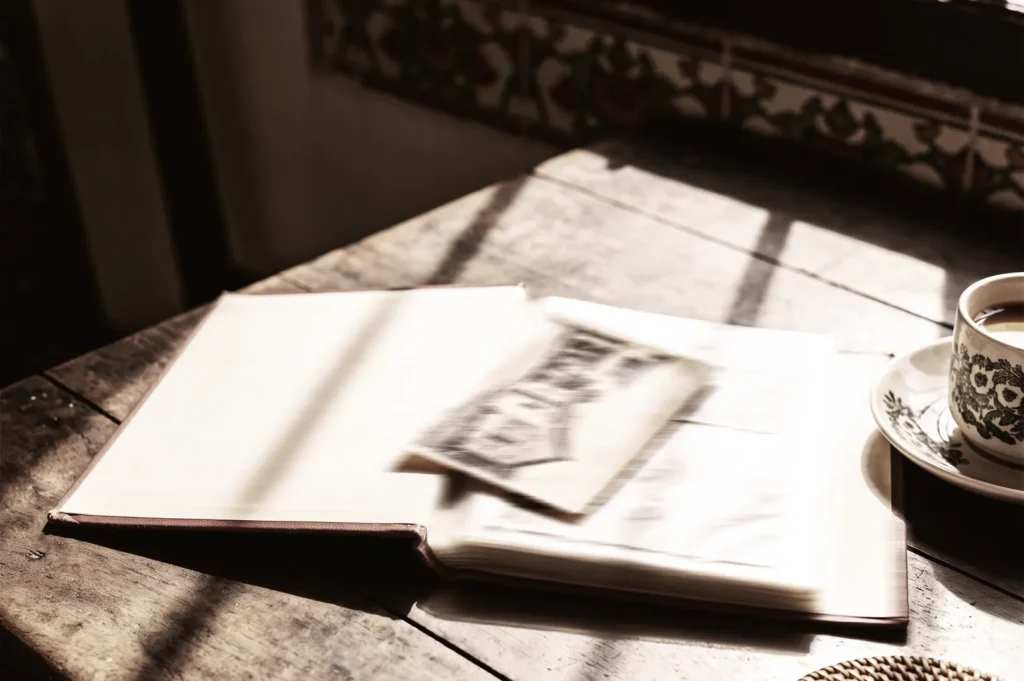
Put a photograph on the table. Play one familiar song. Bring out an old recipe book. Pick up an object that once belonged to the person’s working life.
Then wait.
We are accustomed to filling silence quickly, but older adults may need more time to respond, particularly when finding words has become difficult.
You do not need to rescue every pause.
A memory may be taking the long way back.
Ask Questions That Cannot Easily Be Failed
There is an important difference between inviting a memory and testing one.
“Who is that?”
“Don’t you remember this?”
“What year was this taken?”
These questions may sound harmless, but for someone experiencing memory difficulties, they can quickly expose what is missing.
Try questions with room inside them instead.
“What do you notice in this picture?”
“What were Sundays like when you were young?”
“What kind of music did you enjoy?”
“Tell me about that house.”
Questions like these allow the person to begin wherever memory is strongest.
They can describe a feeling rather than a date. They can talk about the dress instead of naming everyone in the photograph. They can hum the melody without remembering the singer.
The conversation becomes an invitation rather than an examination.
Use More Than Photographs
Family albums are valuable, but memory has many entrances.
Music can awaken associations that ordinary conversation does not reach. Smells can bring back kitchens, gardens, churches, workshops, holidays, and people. Familiar objects can reconnect someone with roles they held for decades.
Think about the person’s life rather than what is traditionally considered nostalgic.
For a former carpenter, an old hand tool may carry more meaning than a wedding photograph.
For someone who cooked every day, a handwritten recipe may lead somewhere unexpected.
For a lifelong gardener, the smell of crushed herbs might invite a story before any question is asked.
Guidance on using familiar objects and sensory prompts in reminiscence supports the broader idea that reminiscence can involve tangible prompts and personally meaningful material, while evidence suggests its effects can vary considerably between people and settings.
Personal history matters.
The best prompt is often the one that belongs to the person in front of you.
Follow the Story Instead of Your Question List
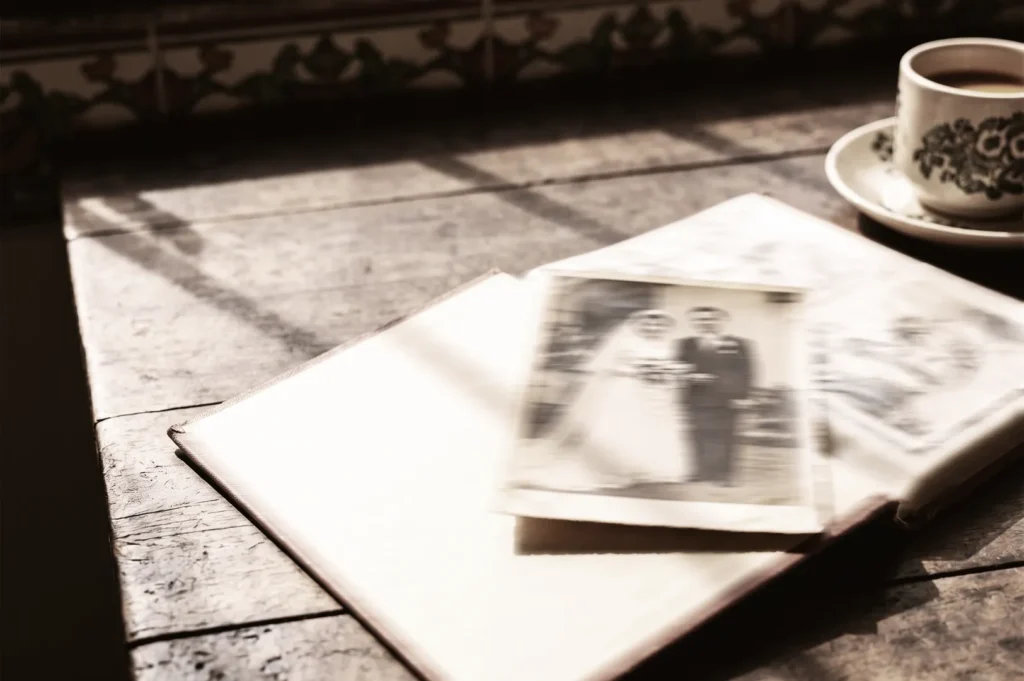
Suppose you wanted to ask your mother about her wedding.
You show her a photograph, but instead of talking about the ceremony, she notices her sister standing near the edge of the picture.
Then she begins talking about sharing a bedroom as children.
Follow her there.
The unexpected story may be more accessible, more comfortable, or simply more important to her in that moment.
Memory conversations become richer when we stop trying to control their destination.
This is particularly important when memory is changing.
A person may not be able to travel through their history in chronological order anymore. They may move through association instead: a dress leads to a sister, the sister leads to a childhood house, the house leads to a dog nobody has mentioned in forty years.
Let the path wander.
Write Down the Ordinary Things
Families often preserve milestones.
Weddings. Births. Graduations. Military service. Major journeys.
But a life is mostly made from smaller things.
What did breakfast smell like in the childhood home?
Who always arrived early at Christmas?
What phrase did Grandma use when she was annoyed?
Which chair belonged to Dad?
What did Mum order whenever she went to a café?
These details may seem insignificant until the person who remembers them can no longer tell you.
Record them.
A notebook is enough. You can also save short audio recordings when the person is comfortable with it, caption photographs, or collect small stories in a digital document.
Do not worry about producing a perfect biography.
You are preserving texture.
Accept That Some Moments Will Hurt
Memory conversations are not always comforting.
A photograph can cause confusion. A song can bring grief. A person may remember someone who died while temporarily forgetting that the death occurred.
And sometimes the painful moment belongs to the family member listening.
There is a particular ache in realizing that someone who once knew every detail of your life is struggling to place your name.
That experience is explored in The Night My Father Forgot My Name, where reminiscence becomes less about recovering a missing fact and more about finding another route toward connection.
When a memory prompt causes distress, you do not have to continue.
Put the photograph away.
Change the music.
Make tea.
Connection matters more than completing the activity.
Preserve the Moment, Not Just the Memory
It is easy to become focused on what we hope to save.
The story. The name. The date. The recording.
But something else is happening while we collect these things.
We are spending time together.
Perhaps your father tells the same story he told last week.
Perhaps your mother cannot remember the photograph but laughs at your description of everyone’s clothes.
Perhaps no significant memory appears at all.
You still shared ten quiet minutes.
Not every meaningful moment needs to become an artifact for the future.
Some are valuable because they happened once, slowly, between two people who were paying attention.
Ask the questions while you can.
Save what feels worth saving.
But do not become so busy preserving the memory that you miss the person sitting beside you.
Sometimes the most important part of remembering together is simply being there.