The elevator rises so fast that your ears notice before you do.
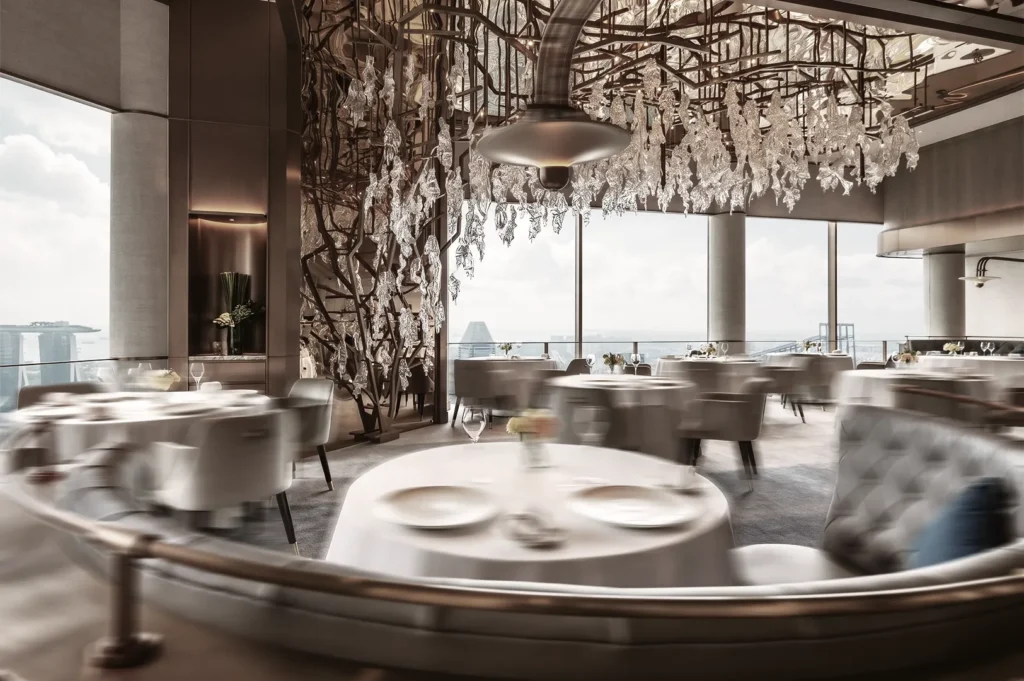
Then the doors open, and the city drops away. JAAN sits on the 70th floor of Swissôtel The Stamford, and from the window tables Singapore looks less like a place and more like a map someone has left out in the sun. The Padang is a green square. The river bends like a ribbon. Far off, ships wait in the strait, patient as cattle in a field.
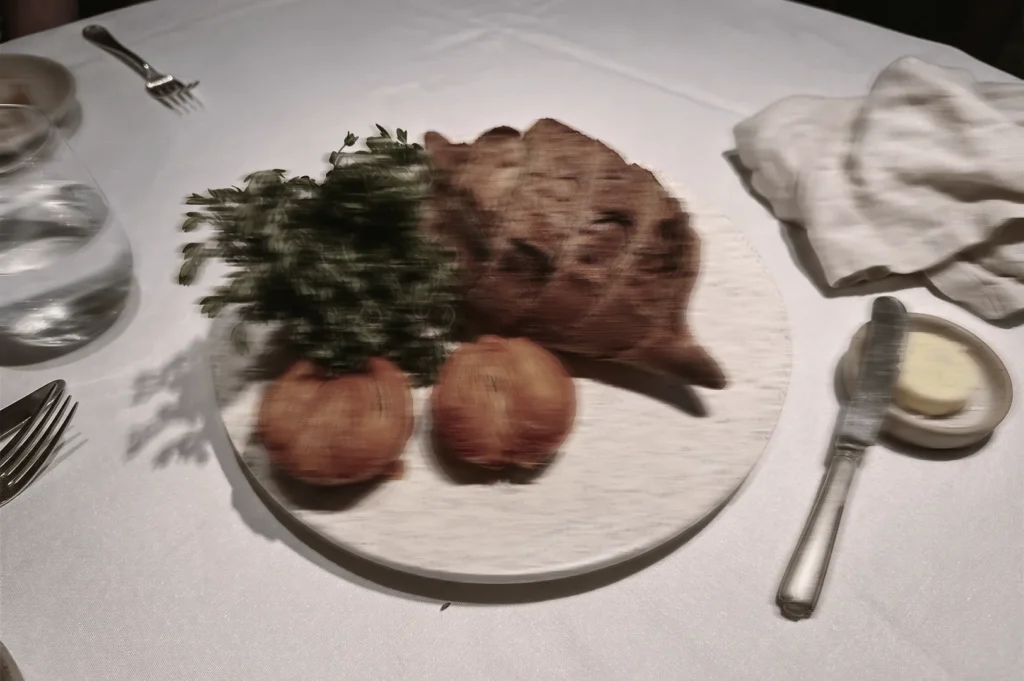
Inside, the room is small and hushed. There are only a handful of tables, and the light comes mostly from the sky. Plates move without a sound. A server sets down a warm loaf of bread with a crust that crackles faintly as it cools.
I tore off a piece and tasted butter, salt, and something I didn’t expect to find this close to the equator.
It tasted like an English morning.
A Boy From the Devon Coast
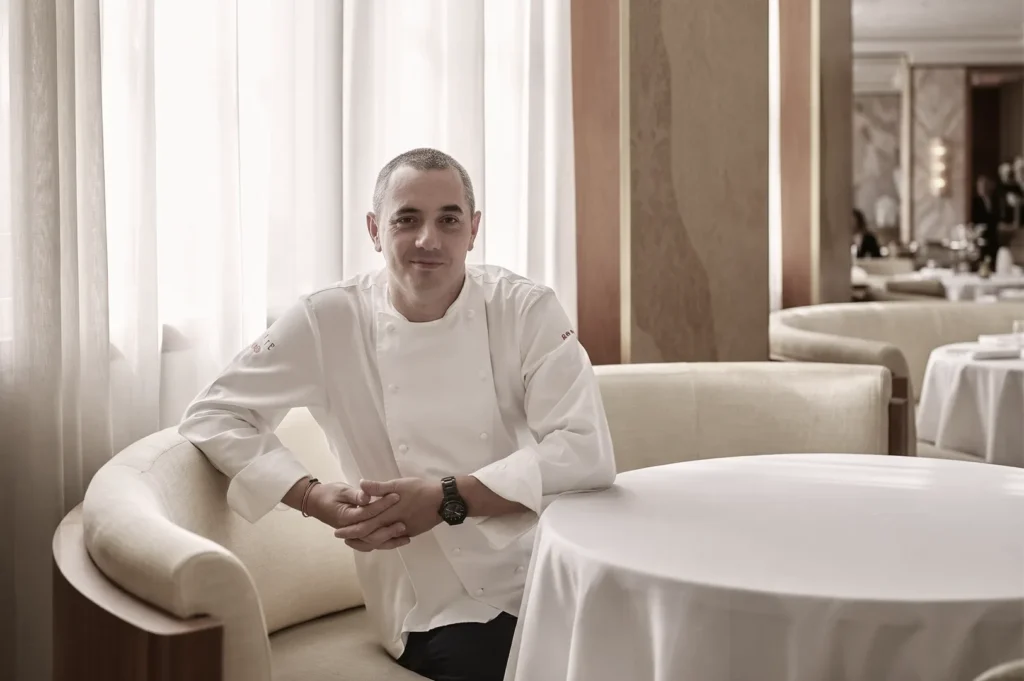
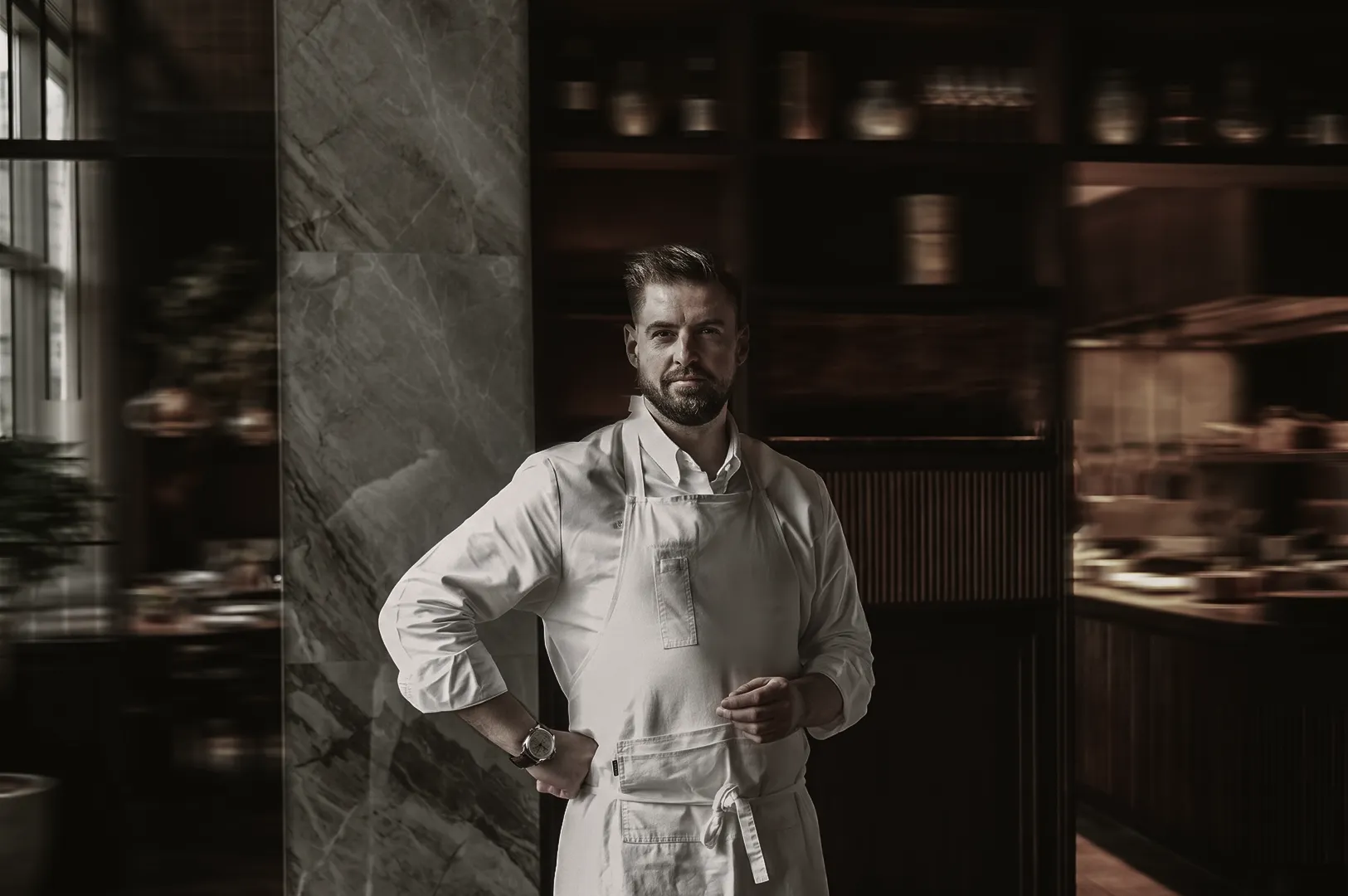
Kirk Westaway grew up in Devon, on England’s southwest coast. It’s a place of salt wind, cliff paths and low grey skies that can turn bright in a single afternoon.
British food has carried an unfair reputation for a long time. People joke about soggy vegetables and boiled everything. But anyone who grew up there knows a different story. There are roast dinners on Sundays and crab pulled fresh from cold water. Strawberries arrive with clotted cream in summer, and gardens give up their best in early autumn.
That was the food Westaway knew. Simple, seasonal and honest. It’s the food of grandparents and village pubs, of kitchens where nothing went to waste.
He trained in England, then traveled. Eventually he came to Singapore and to JAAN, where he worked in the kitchen before taking it over. In 2019, the restaurant’s name changed to carry his own: JAAN by Kirk Westaway.
That small addition to a sign said a great deal. It said this kitchen would now cook from one man’s memory.
Reinventing What Was Always There
Westaway calls his approach Reinventing British. It’s a modest phrase for a bold idea.
He doesn’t throw out the classics. He studies them closely, the way you might study an old family photograph, looking for what made it matter. Then he rebuilds them with modern technique, careful sourcing and a strong sense of season.
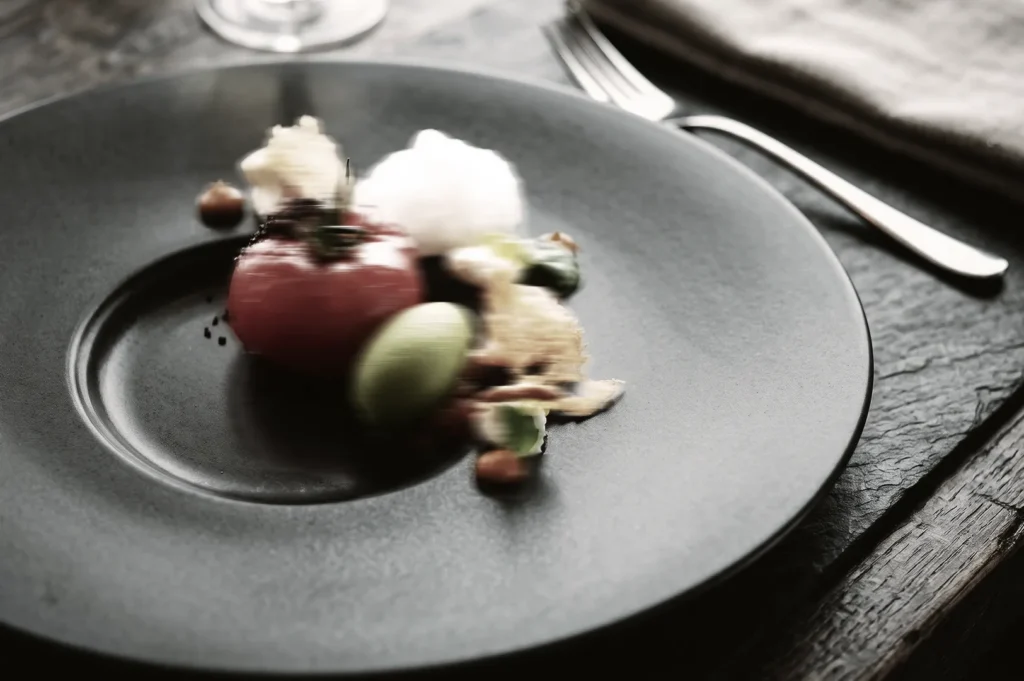
A tomato course arrives, built from one fruit shown many ways. One version is bright and raw, another sweet and concentrated. A clear, cold essence tastes the way a greenhouse smells in August. An egg dish nods to the full English breakfast without a trace of grease. It’s soft and smoky, and it comforts the way that breakfast always did.
Nothing is a joke or a gimmick. Each dish feels like a respectful question. What if we took this seriously?
The answer, it turns out, earned JAAN two Michelin stars.
The Distance That Sharpens Memory

There’s something strange about cooking your country’s food on the other side of the world.
At home, a national cuisine is just dinner. Nobody thinks about it. Far away, it becomes something else. It becomes a way of holding on.
Westaway has lived in Singapore for well over a decade. The ingredients he grew up with often travel thousands of miles to reach his kitchen. British cooking has deep roots in weather, soil and season, and the long history of British cuisine is closely tied to the land it comes from. Recreating that feeling under tropical skies takes more than recipes. It takes memory.
I think distance sharpens that memory. When you can’t simply walk to the market for Devon crab, you start to remember exactly what it tasted like. You remember the weather on the day you first ate it and who was beside you.
Homesickness, handled carefully, can become a kind of precision.
A Small Memory of Rain
My father spent two years studying in England when he was young. He rarely talks about it now. His memory drifts, and many of those years have slipped quietly away.
But once, when I mentioned I’d eaten British food high above the city, he smiled.
“Rain,” he said. “Always rain. And tea with too much milk.”
That was all. Two small details, still there after everything else had faded.
I thought about that bread at JAAN, warm and salted. I thought about how a single taste can carry a whole country inside it. Westaway must know this better than anyone. Every plate he sends out is a postcard from somewhere he once called home.
Keepers of the Flame
Chefs who cook from memory are doing more than feeding people. They are protecting something.
In Singapore, some cooks guard flavors passed down by grandmothers and aunties, recipes that might vanish if no one cared enough to keep them. I’ve written about how Chef Damian D’Silva preserves Singapore’s culinary heritage through memory, turning old family dishes into living stories.
Westaway’s heritage is different. His grandmothers cooked in a cold English kitchen, not a humid Singapore one. But the instinct is the same. Both chefs refuse to let the food of their childhood be forgotten or dismissed. Both believe a humble dish can hold real dignity.
Coming Back Down
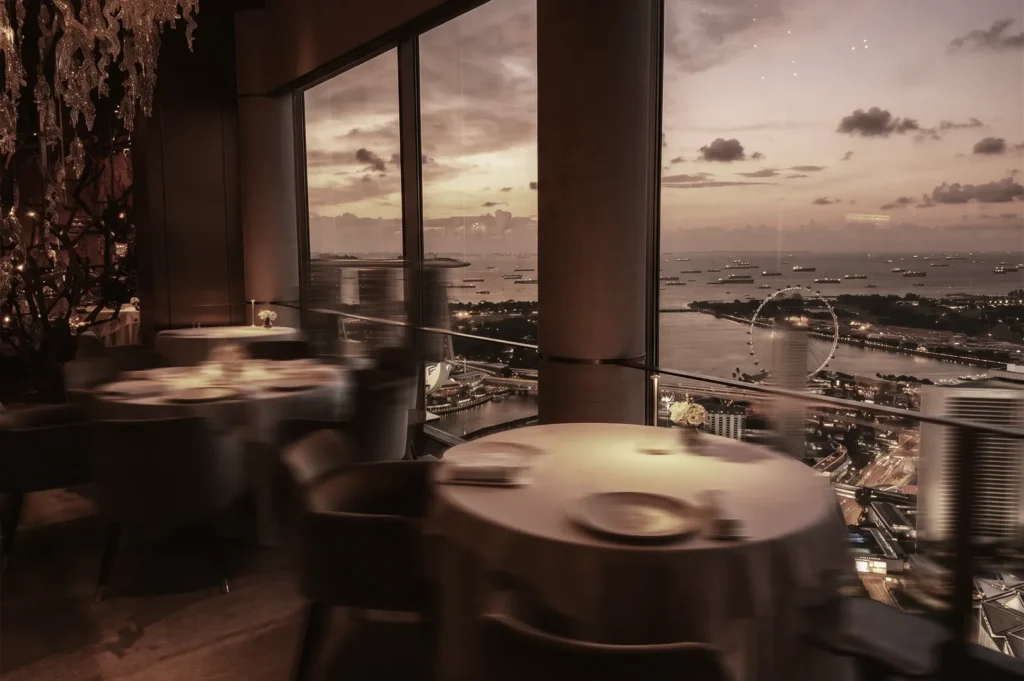
By the time dessert arrived, the clouds outside had turned pink. Lights flickered on across the city, one window at a time.
I sat longer than I needed to. Seventy floors up, the noise of Singapore never reaches you. There’s only the soft clink of cutlery and the slow change of the sky.
When I finally stepped back into the elevator, my ears popped again on the way down. At street level, the heat wrapped around me like a damp towel. Taxis honked. Someone laughed outside a convenience store.
I carried the taste with me anyway. Butter and salt, and a tomato that remembered summer.
Kirk Westaway cooks far from home. But on every plate, home is exactly where he’s standing.
If this piece stirred something in you — the way a taste or a smell can pull someone you love back into the room, even briefly — you might find something familiar in the night my father forgot my name, and what memory taught me in the silence that followed. It’s a quieter story, but it sits close to this one.