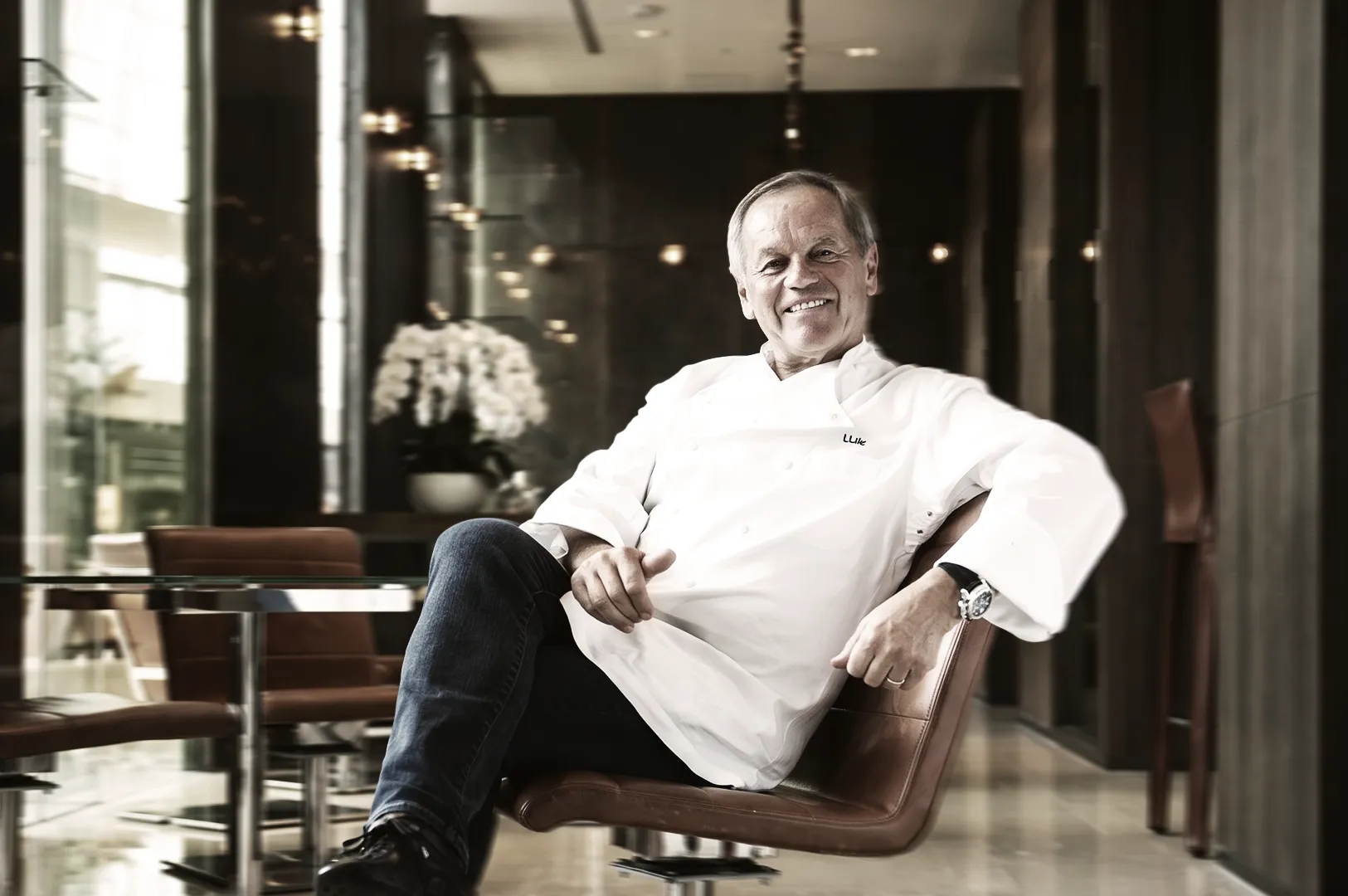
Wolfgang Puck operates three distinct dining spaces at Marina Bay Sands in Singapore — Spago Bar & Lounge on the 57th floor, CUT by Wolfgang Puck, and Spago Dining Room. Each reflects a different chapter of his career, from an Austrian childhood kitchen to French training grounds in Monaco and Provence, and finally to Spago’s 1982 opening in West Hollywood. Together, the three rooms trace one chef’s long relationship with food, light, and patience.
There is a particular kind of quiet that settles over a kitchen before service begins. Pans are still cold. The pass is wiped clean. Someone is folding napkins with the same motion they have used for years. I noticed this stillness three times in one evening at Marina Bay Sands, moving between three restaurants that share a single name on their menus — Wolfgang Puck — and almost nothing else in how they feel.
Spago Bar & Lounge sits on the 57th floor, open to the sky. CUT closes itself off, dim and deliberate, built for the sound of a knife through well-rested meat. Spago Dining Room looks out over Marina Bay from the rooftop, somewhere between the other two in both temperament and height. Visiting all three in sequence felt less like a tasting tour and more like reading a biography out of order — each room a different decade, a different country, a different version of the same hands at work.
Where Wolfgang Puck Learned to Watch a Stove
Wolfgang Puck grew up in Austria, in a household where the kitchen was not a backdrop but the center of daily life. His mother worked as a pastry chef, and it was at her side that he first learned the discipline that pastry demands — the kind of precision that leaves no room for guessing, where a few grams or a few degrees change everything. Many chefs describe an early memory of heat and sugar and their mother’s hands; Puck’s early education happened to come from someone whose job depended on getting it right every time.
That early apprenticeship sent him further than the family kitchen. He trained at the Hôtel de Paris in Monaco, a storied address built into the social rhythm of Monte Carlo since the late nineteenth century. From there, he moved to L’Oustau de Baumanière in Provence, a three-Michelin-starred house set among the olive groves of Les Baux-de-Provence — a kitchen known even then for treating regional ingredients with unusual seriousness.
In 1982, that training met a different climate entirely. Puck opened Spago in West Hollywood, a restaurant that put an open kitchen, a wood-fired oven, and French technique applied to Californian produce in full view of the dining room. It became less a single restaurant than a method — one that would eventually travel, decades later, to the fifty-seventh floor of a hotel in Singapore.
Spago Bar & Lounge: Where the City Comes Up to Meet You
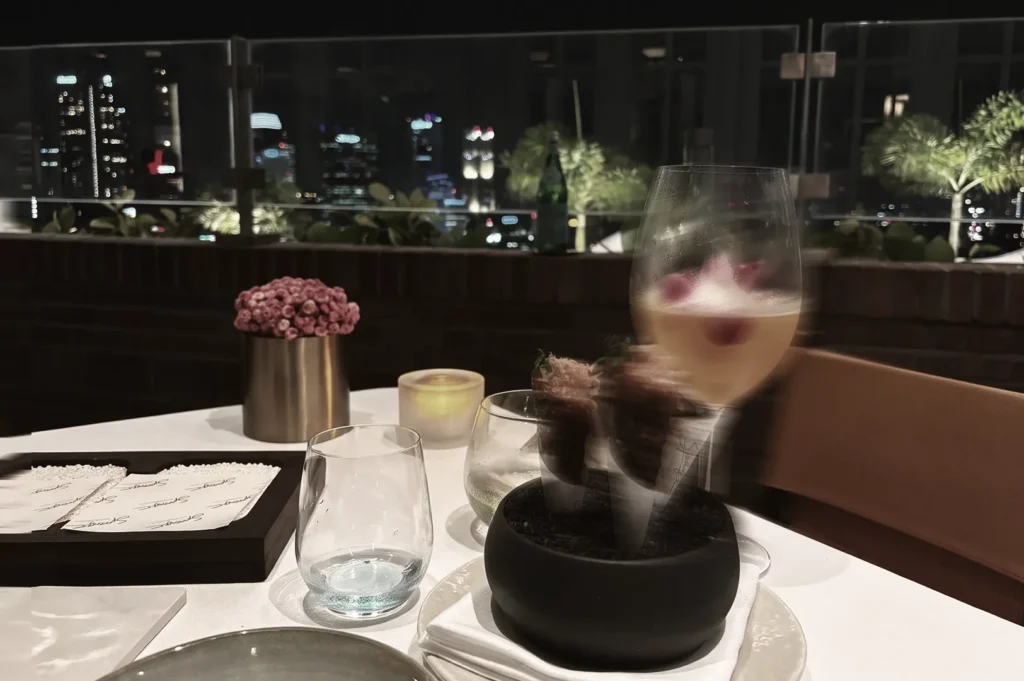
The elevator to Spago Bar & Lounge moves quickly enough that the ears register the change in altitude before the eyes adjust to the view. Doors open onto an alfresco room with the Singapore skyline laid out in every direction, the kind of height that makes conversation drop a little, almost involuntarily.
Here, the menu leans toward the kind of eating that suits an evening with no fixed endpoint. The Chicken “Laksa” Spring Roll takes a dish most Singaporeans grew up with and folds it into something meant to be eaten standing, drink in hand. The Big Eye Tuna Tartare Cones arrive cold and precise, built for the first bite of a long night rather than the center of a meal. Cocktails carry names that suggest their own small stories — The Garden of Eden, built around botanical notes that shift with the light outside, and Rough Love, sharper and less forgiving, the kind of drink that announces itself.
What stays with you after leaving Spago Bar & Lounge is not any single dish but the rhythm of the place — small plates passed between hands, the skyline changing color as the hour moves later, conversations that continue without needing a table to anchor them.
What Makes CUT by Wolfgang Puck a Different Kind of Room
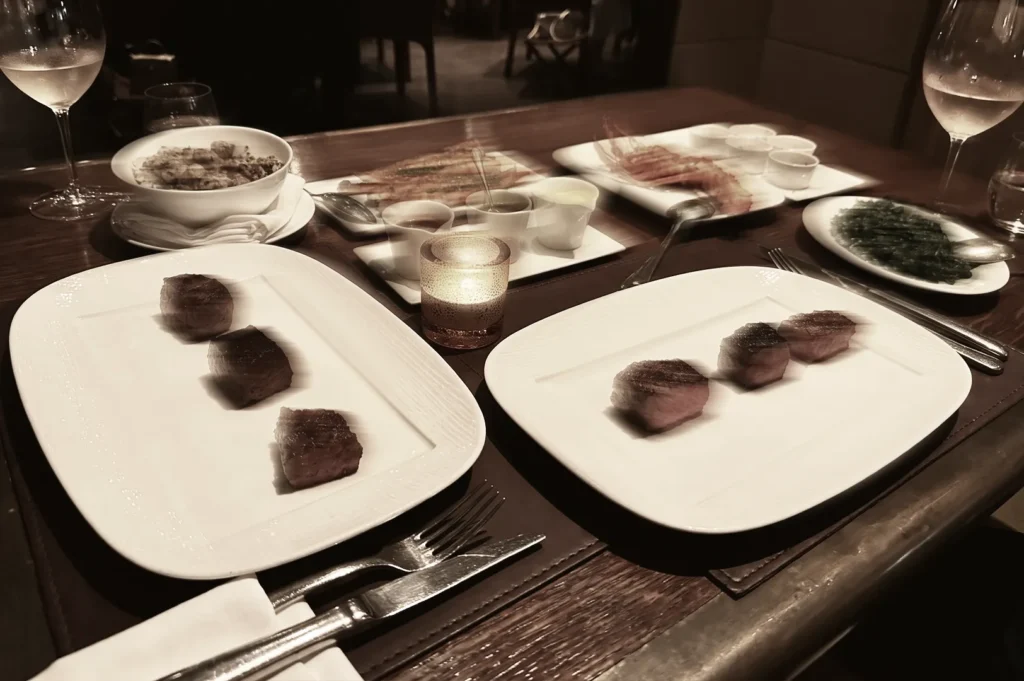
A few floors away, CUT by Wolfgang Puck operates on an entirely different register. This is the Michelin-starred steakhouse, and the room makes its intentions clear before the first course arrives — lower light, heavier silverware, the quiet hum of a kitchen that has built its reputation one cut of beef at a time.
The menu reads like a study in provenance: Japanese Wagyu, USDA Prime, and Australian Grain Fed beef are each presented with their origin stated plainly, as though the diner should know exactly what farm or region is responsible for the plate in front of them. For those visiting at midday, the Early CUTs menu offers a three-course path through the kitchen’s range — a Maryland Blue Crab Cake to open, a USDA Prime Sirloin at the center, and a Warm Royal Gala Apple Crumble to close, the kind of dessert that feels deliberately unpretentious after everything that came before it.
If Spago Bar & Lounge is built for movement, CUT is built for stillness. Guests who want to experience that pacing firsthand can reserve a table through the Marina Bay Sands dining page, though the room itself is best understood by sitting in it rather than reading about it.
Spago Dining Room: A Rooftop That Has Been Watched Before
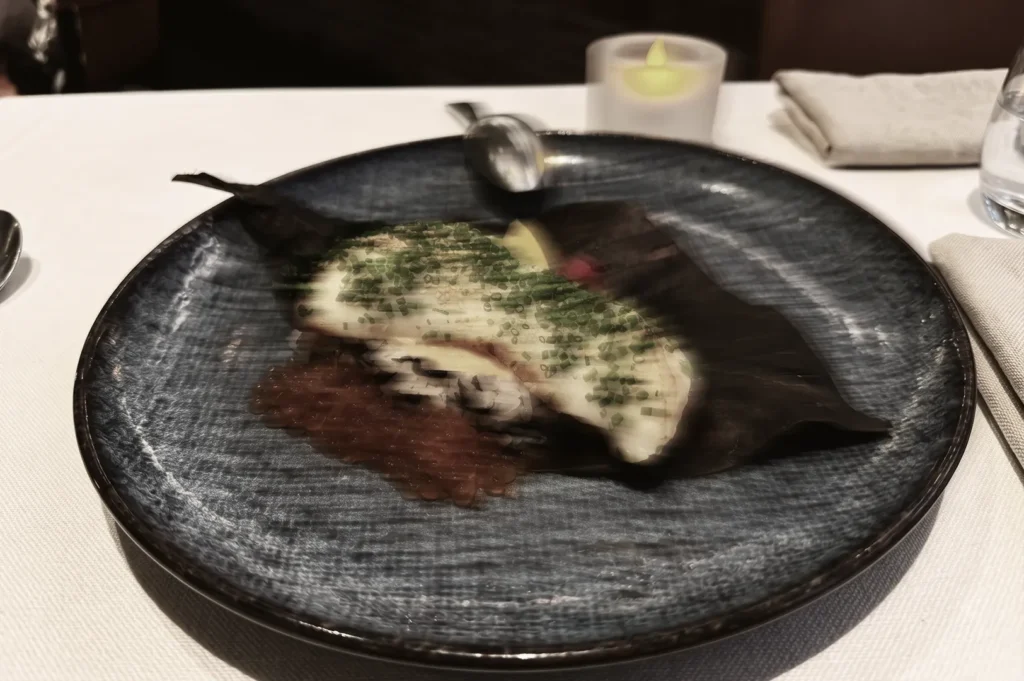
The last of the three rooms, Spago Dining Room, sits on the rooftop and looks directly out over Marina Bay — a view that has earned its share of recognition over the years. Forbes Travel Guide awarded it Four Stars annually from 2017 through 2025, and the Tatler Dining Guide 2024 singled it out for Well-Executed Dishes, a phrase that undersells how much restraint that kind of consistency actually requires.
The menu here draws from a wider geography than the other two rooms combined. The Honey Miso Broiled Chilean Seabass carries the lacquered sweetness of a technique more common in Japanese kitchens, applied to a fish caught on the other side of the world. The Australian Double Lamb Chop arrives simpler, letting the quality of the meat do most of the talking. And the Traditional Kaiserschmarrn — the shredded, caramelized pancake Puck would have known from childhood kitchens in Austria — closes the meal in a way that feels less like a dessert course and more like a signature, a small return to where his cooking began.
Watching the kitchen staff plate that Kaiserschmarrn, dusted and torn by hand rather than cut with precision, it was hard not to think back to a pastry chef’s kitchen in Austria decades earlier. Some dishes travel the farthest distance and still taste like home.
One Name, Three Different Evenings
Visiting all three rooms in one night made the differences between them sharper than any menu description could. Spago Bar & Lounge belongs to early evening and open air. CUT belongs to a slower, more deliberate hour. Spago Dining Room sits somewhere between the two, rooftop light fading into the skyline Puck’s restaurants now share with the rest of the city.
What connects them is not a single dish or a signature technique, but a chef who has spent decades moving between kitchens — Austria, Monaco, Provence, California, and now Singapore — without losing the discipline his mother taught him at a pastry bench. For readers drawn to the people behind a kitchen rather than just what lands on the plate, the Hands & Stories series follows a similar thread through other chefs working in this city. And for those curious about the building that holds all three of Puck’s Singapore restaurants, Marina Bay Sands: What the Skyline Remembers looks at the structure itself, long before any of these kitchens opened inside it.