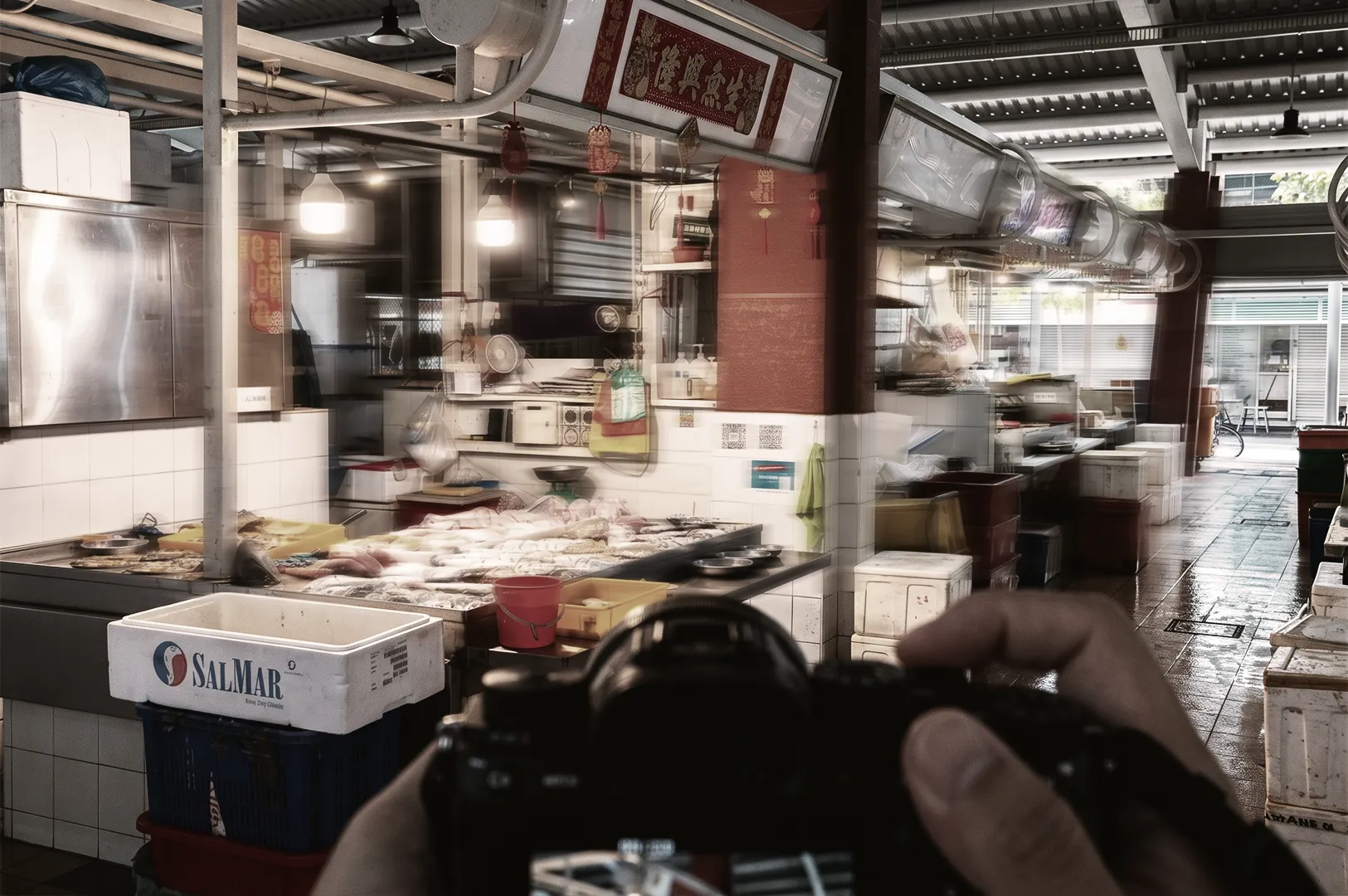
It was a wet morning at the wet market. Six-fifteen, maybe. The fluorescent tubes above the fish stalls were still flickering awake.
I had my camera around my neck. I always do.
An old woman stood at the vegetable stall, holding a single bunch of kangkong. She wasn’t buying it. She was just holding it, turning it over in her hands, the way you’d hold a letter you weren’t ready to open.
The light was perfect. Soft, grey, falling sideways through the gap in the zinc roof.
I raised the camera.
Then I lowered it.
I still don’t know if that was the best decision I ever made as a photographer, or the worst.
The Habit of Noticing
People ask me when I started taking pictures. I usually say university, because that’s when I bought my first camera with my own money.
But that isn’t really true.
I started much earlier. Sitting in the back seat of my father’s car, watching rain race down the window. Counting how many uncles at the coffee shop wore white singlets. Noticing that my mother always touched the doorframe on her way out, a small habit she never seemed aware of.
I didn’t have a camera then. I just had the looking.
Photography didn’t teach me to see. It gave me permission to keep staring.
That’s the part no one tells you. Most photographers aren’t people who learned to notice. We’re people who never learned how to stop.
What It Means to Bear Witness
There’s a weight to this work that I didn’t expect.
When you point a camera at someone, you’re making a quiet promise. I saw this. It happened. It mattered.
I’ve photographed weddings where the bride’s hands were shaking. I’ve photographed a hawker on his last day of business, wiping down his steel counter one final time, slower than he needed to. I’ve photographed a funeral where a boy of six kept tugging his father’s sleeve, asking when they could go home.
I didn’t want that last photograph. The family asked for it.
Later, the boy’s mother told me it was the only picture she had of her husband from that year. He was looking down at their son. His face was very tired and very kind.
“I didn’t know he looked at him like that,” she said.
That’s the job, I think. Not making things beautiful. Making sure they’re not lost.
A Photograph Is Not a Memory
Here is something I’ve come to believe after years behind the lens.
A photograph is not a memory. It’s the doorway to one.
I have thousands of images on hard drives. Most of them I couldn’t tell you anything about. The light, maybe. The street. But not the feeling.
Then there are a handful I can’t look at without being pulled straight back. The smell of the room. The sound of a fan clicking. What I had for lunch that day, and who I was worried about.
The difference isn’t the quality of the picture.
It’s whether I was present when I took it.
When I first started reading about how Henri Cartier-Bresson described the decisive moment, that brief instant when what we see and what we feel arrive at the same time, I thought it was about timing. Fast reflexes. Good instincts.
Now I think it’s about attention. You can’t catch a decisive moment if you’re only half there.
The Loneliness of the Lens
Every photographer I know has the same strange gap in their family albums.
We’re never in them.
Look through my sister’s wedding photos and you’ll see everyone. Aunties in their best kebaya. My nephew asleep under the banquet table. My father dancing badly.
You won’t find me. I was behind the camera all night, making sure no one else was missing.
I don’t regret it. Not exactly.
But there’s a particular kind of solitude to always being the one who watches. You stand slightly apart. You become part of the furniture, which is useful for the work and lonely for the heart.
Some nights, scrolling through a shoot, I catch my own shadow at the edge of a frame. A shoulder. The tip of a shoe.
Proof I was there, even when no one could see me.
And Yet, the Privilege
For all of that, I wouldn’t trade it.
Because people let you in. That’s the gift.
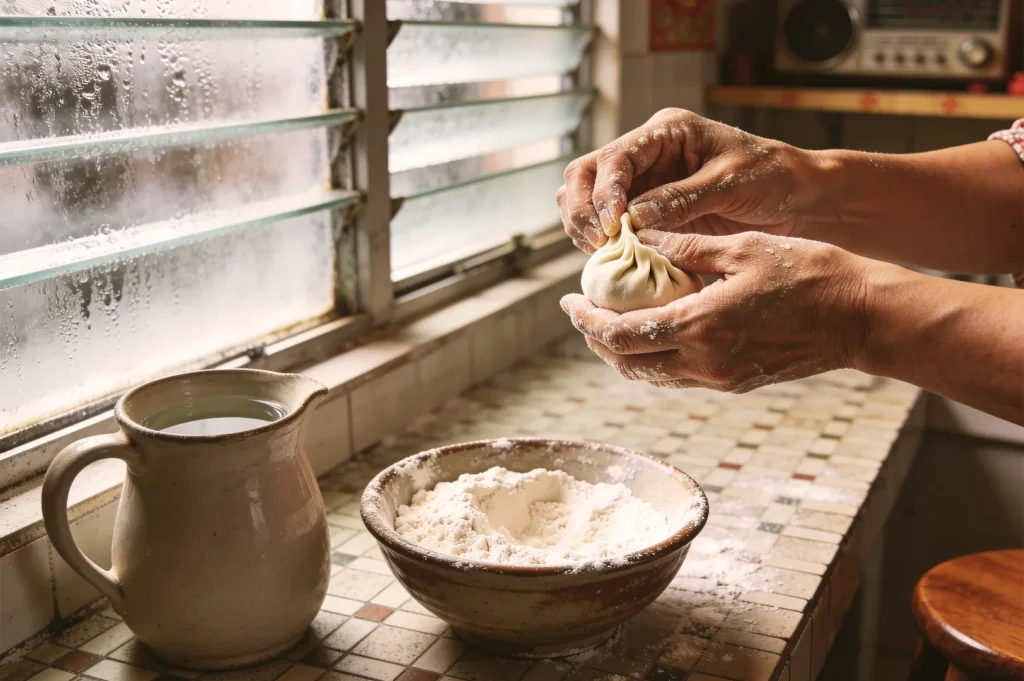
A grandmother lets you sit in her kitchen while she folds dumplings. A fisherman lets you ride along at four in the morning and doesn’t say a word for two hours. A child holds up a scraped knee, proud of it, wanting you to make it last forever.
They trust you to look closely and not look away.
I try to honour that. I try to be slow about it. Many of the stories I share on Unrushed Memories, where I keep the small moments I’ve been lucky enough to witness began exactly like this. A camera, a quiet room, and someone willing to be seen.
Back to the Market
So, the old woman with the kangkong.
I didn’t take the picture. Something in her face told me the moment wasn’t mine to keep. She looked like she was remembering someone. Cooking for two, maybe, out of habit. Or realizing she didn’t need to anymore.
I let her have it.
She put the vegetables back, bought a smaller bunch, and walked away under a faded umbrella.
That was eleven years ago. I can still see every detail. The grey light. The water pooling on the concrete. The way her thumb ran along the stems.
I have no photograph of it.
I don’t need one.
What I Carry Now
Last month, my niece borrowed my old camera for a school project. She came back and showed me her pictures on the little screen.
Most were blurry. A cat. Her shoes. The ceiling fan.
The last one was of me. Sitting at the kitchen table, coffee in hand, looking out the window at nothing in particular.
I didn’t know she’d taken it.
I looked tired. I looked quiet. I looked, I think, like someone paying attention.
“You always look like that,” she said. “Like you’re remembering something.”
Maybe I am.
Maybe that’s all a photographer really is: someone who remembers on behalf of everyone else, and every so often, gets remembered back.