I was nine the first time I understood that my father could cook.
I had a fever that wouldn’t break. Three days of it. The ceiling fan turned above me, slow and loud, and the sheets felt too heavy no matter how many times my mother changed them.
On the third evening, I heard something new from the kitchen. A pot set down on the stove. The tap running. Rice being washed, the grains hissing against the metal.
My father was making porridge.
He never cooked. Except when someone needed him to.
The Sound of Rice Breaking
He made it the old way. No shortcuts.
He rubbed the washed rice with a little oil and salt and let it sit. Then into a pot of water it went, with a thumb of ginger sliced into thin coins. He brought it to a boil and turned it down low.
Then he stood there.
That was the part I remember most. He didn’t go to watch television. He didn’t read the paper. He stood at the stove with a wooden spoon and stirred, slowly, for over an hour.
From my bed, I could hear it. The soft knock of the spoon against the pot. The bubbles rising thick and lazy, popping like small sighs. The grains slowly giving up, breaking apart until there was no rice left, only something smooth and white and warm.
The whole house smelled of ginger and steam.
The Bowl on the Tray
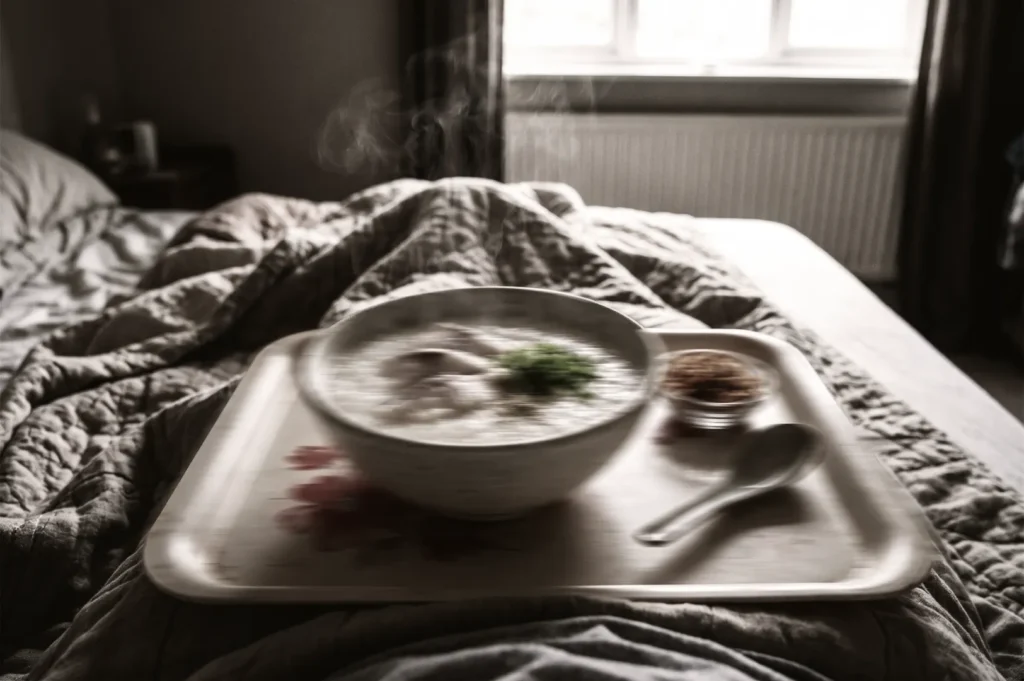
He brought it to me on a plastic tray with a red flower printed on it.
A bowl of porridge, almost too hot to touch. Slices of fish laid on top, turning white at the edges from the heat. A small pile of spring onions. A pinch of white pepper. And on the side, a little dish of fried shallots, golden and crisp, because he knew I liked them.
“Blow first,” he said. “Then eat slowly.”
He sat on the edge of the bed while I ate. He didn’t talk much. He never did. But he watched every spoonful go down, and when I finished, he took the bowl without a word and came back with more.
The fever broke the next morning.
My mother said it was the medicine. I was sure it was the porridge.
Why Taste Holds On
I’ve eaten porridge many times since. At hawker centers. In hotel breakfasts. Once, in a famous shop with a queue down the street.
Most were good. Some were better than his, if I’m honest.
But none of them carried me anywhere.
Then, years later, a neighbor was cooking ginger on a rainy afternoon. The smell drifted through my window, and suddenly I was nine again. Fever-warm. Listening to a spoon knock against a pot.
I later read about how our sense of smell is wired closely to the parts of the brain that hold memory and emotion. It explained why a scent can reach us faster than a thought can.
But I didn’t need the science. I already knew. Some foods aren’t eaten. They’re kept.
Trying to Make It Again
My father is older now. His hands shake. His memory comes and goes. On some evenings, he isn’t sure who I am, something I’ve written about in the story of the night my father forgot my name and how old memories helped us find our way back.
Last winter, he caught a cold that settled deep in his chest.
So I made him porridge.
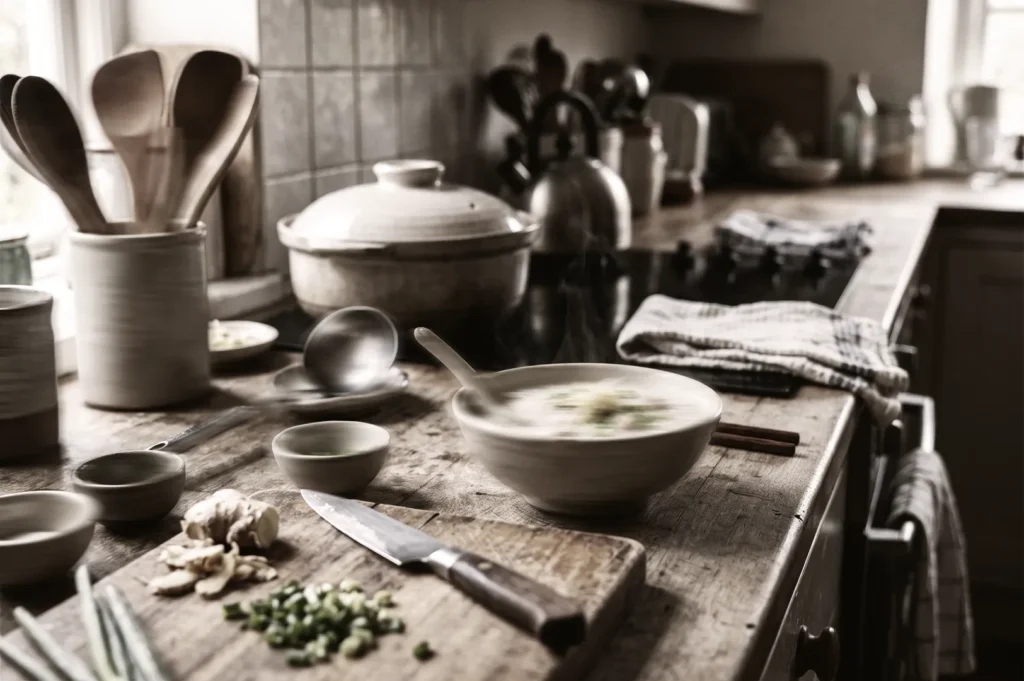
I washed the rice the way he did. I sliced the ginger thin. I stood at the stove and stirred.
It came out too thick. The fish was a little overcooked. I forgot the shallots until the end, and they weren’t crisp enough.
I brought it to him on a tray anyway. Not the red flower one. That’s long gone.
He ate three spoonfuls and stopped. He looked at the bowl for a long time.
“Blow first,” he said quietly. “Then eat slowly.”
I don’t know if he remembered. Maybe the words just lived in him, the way the recipe lived in me.
What Was Really in the Pot
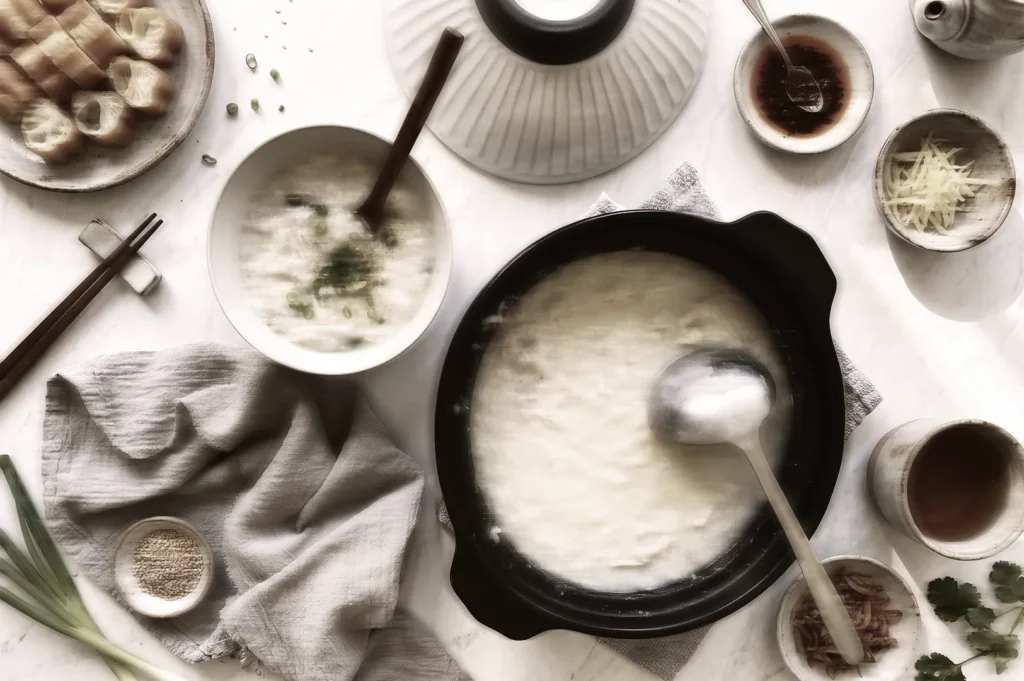
I’ve stopped trying to make it taste exactly like his.
Rice porridge has fed people through illness and hardship for centuries. There’s a reason rice porridge has long been a food of comfort and recovery across Asia. It’s gentle. It asks nothing of you.
But I think the real ingredient was never in the pot.
It was the hour he spent standing there.
A man who didn’t know how to say he was worried. A man who didn’t cook. Stirring the same pot, slowly, until something hard became soft enough to swallow.
Rice. Water. Ginger. Time. And someone who refuses to leave the stove.
That’s the recipe. I’m still learning it.