The Back Step Nobody Swept: Where My Grandmother Kept Her Afternoons
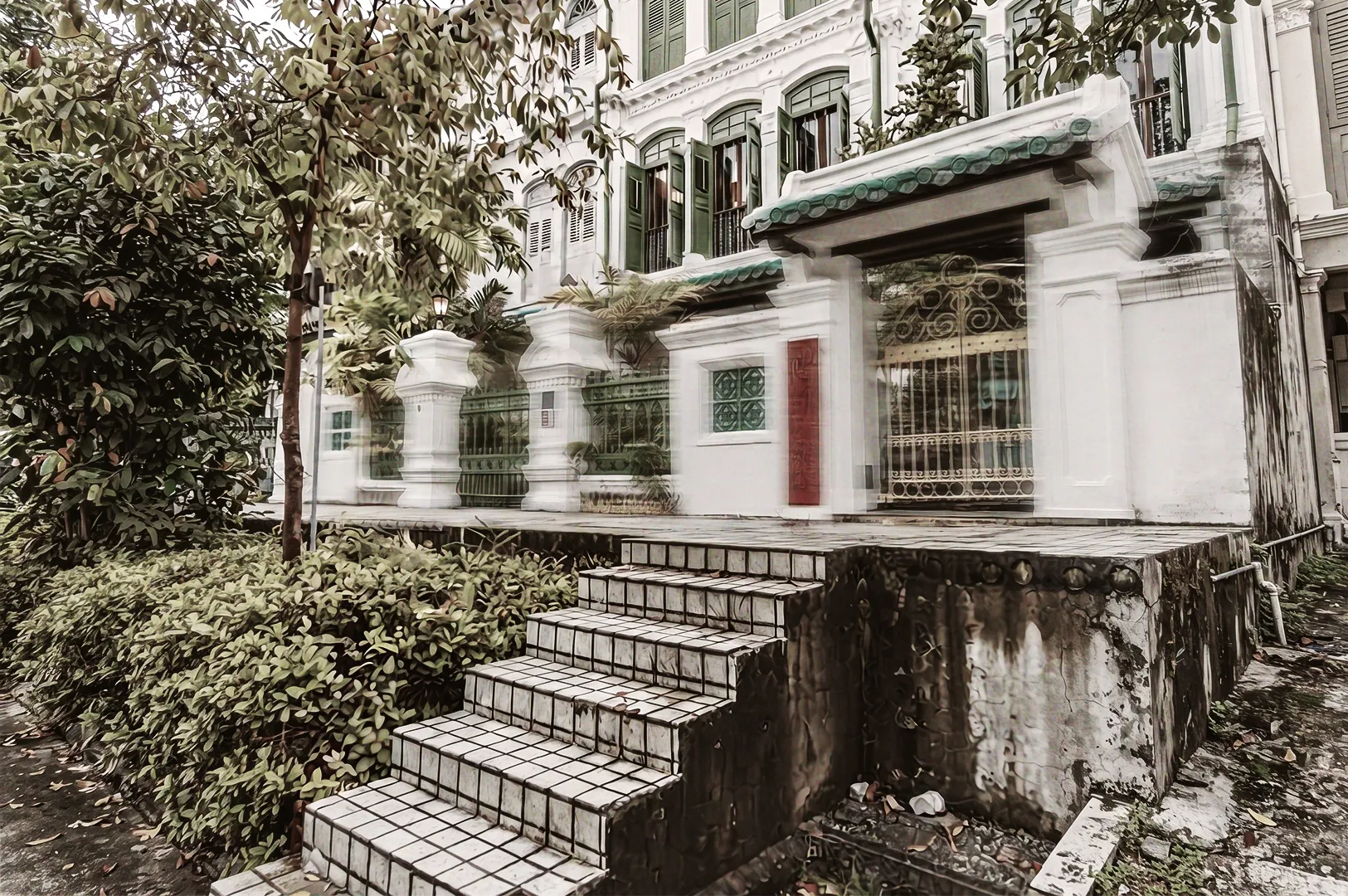
There was a step behind my grandmother’s kitchen.
Just one. Grey concrete, cracked at the left edge, worn smooth in the middle. It sat between the back door and a narrow alley where the drain ran and the neighbor’s cat slept in the shade.
Nobody swept it. Nobody thought about it.
But almost everything I remember about her happened there.
Three O’Clock, Every Day
The house was loud in the mornings. Pots, radio, relatives coming and going with plastic bags of vegetables and news.
By three o’clock, it went quiet.
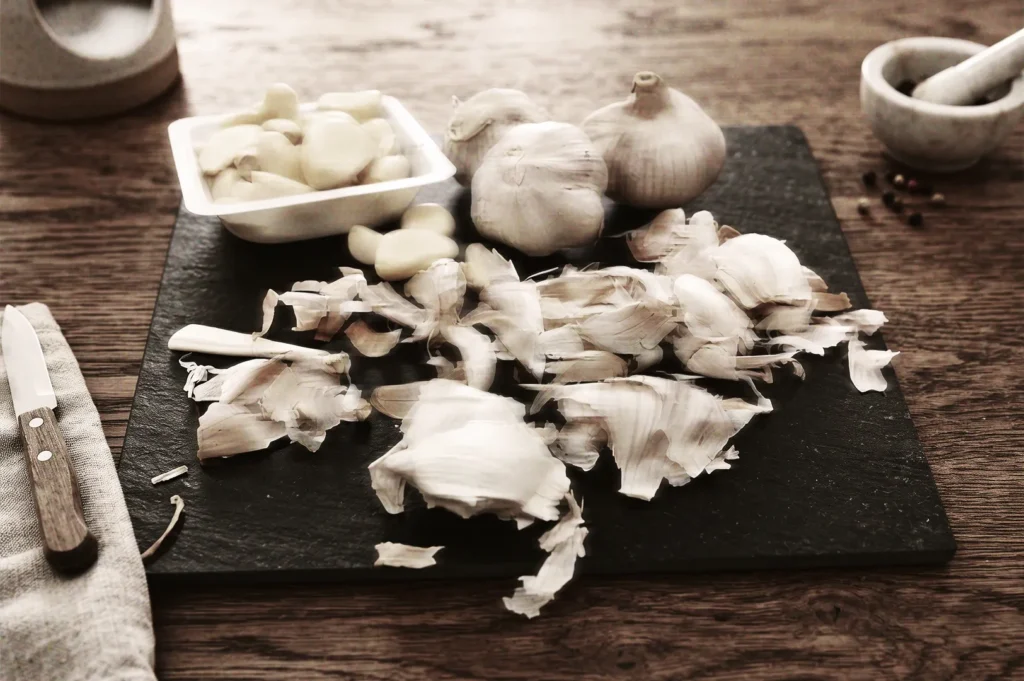
That was when she’d carry a low stool, a tin bowl, and a paper bag of garlic out to the back step. She’d sit with her knees wide, the bowl between her feet, and peel.
One clove at a time. Thumbnail under the skin. A small twist.
The papery shells drifted into the alley like tiny moths.
She never called it a break. But I think it was the only rest she ever took.
The Invitation Without Words
I was eight the first time I followed her out.
I didn’t ask. I just sat down beside her on the step, the concrete cool under my legs even in the afternoon heat.
She didn’t send me back inside. She pushed the bag of garlic an inch toward me.
That was the invitation.
My cloves came out bruised and half-peeled. My fingers smelled sharp for the rest of the day. She didn’t correct me. She just kept working, humming something without a tune.
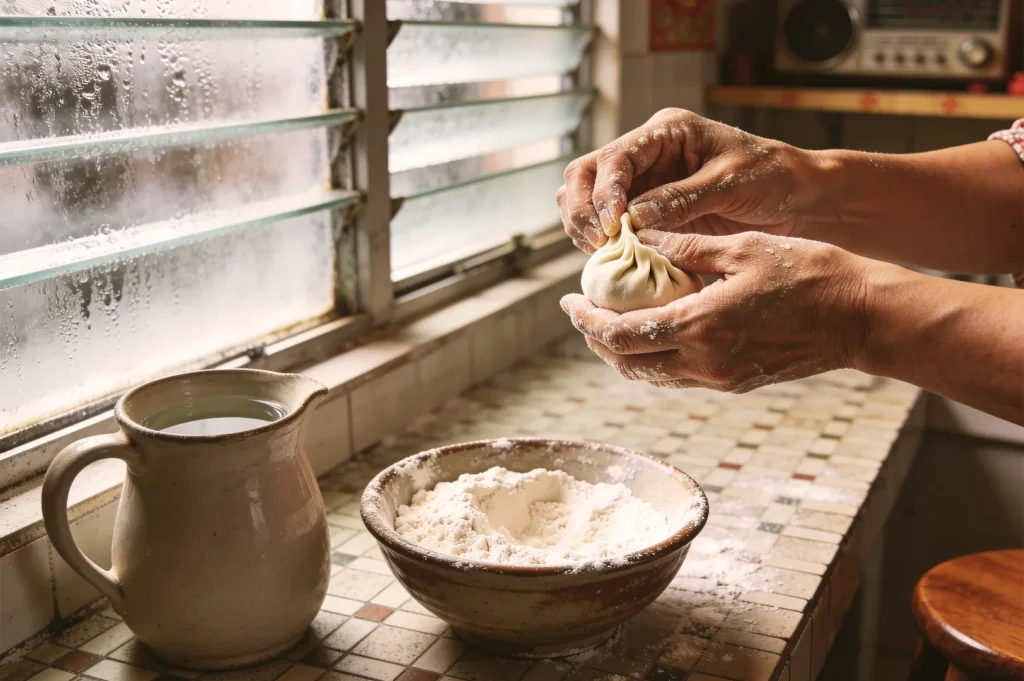
Behind us, through the screen door, the kitchen breathed. Rice soaking. A pot of soup on low. The ceiling fan clicking once every turn.
In front of us, the alley. Laundry lines. A bicycle with a flat tire leaning against a wall. The smell of someone else’s dinner starting three doors down.
We sat between two worlds, and neither of them needed us yet.
What Was Said on the Step
My grandmother didn’t talk much at the dinner table. There were too many people. Too many opinions.
On the step, she talked.
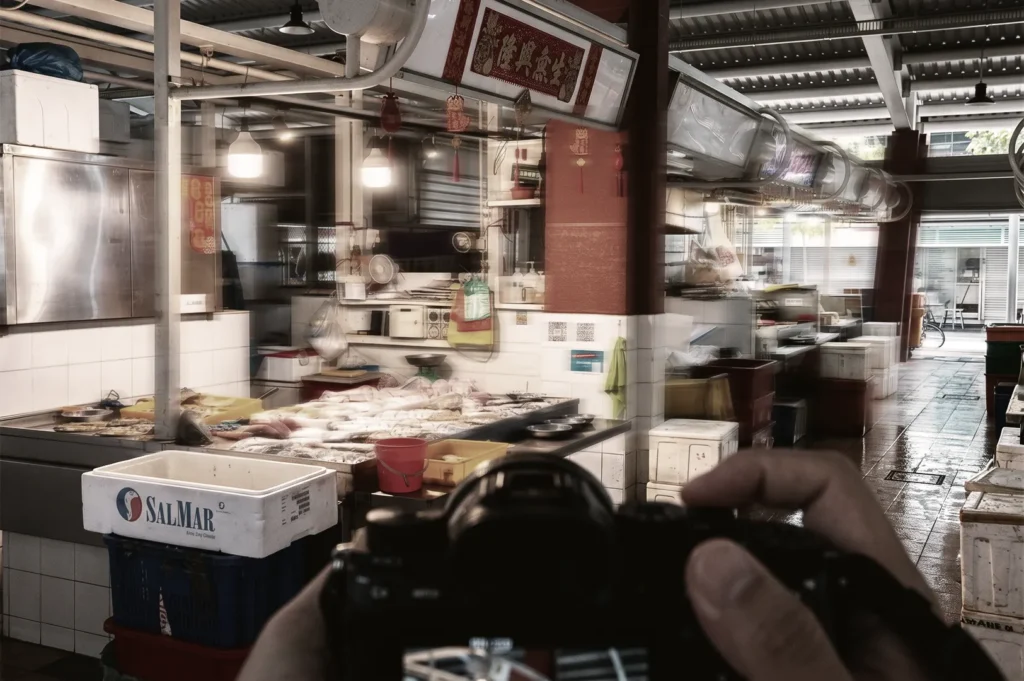
Not big stories. Small ones. The market she went to as a girl, where the fishmonger sang. The first pair of shoes she ever owned, a size too large, stuffed with newspaper at the toes. A brother who left for work across the sea and sent letters she kept in a biscuit tin.
She told me these things while looking at the garlic, never at me.
I’ve since realized that’s how many people share what matters. Side by side, hands busy, eyes somewhere else. It’s easier to be honest when no one is watching your face.
The Taste of an Afternoon
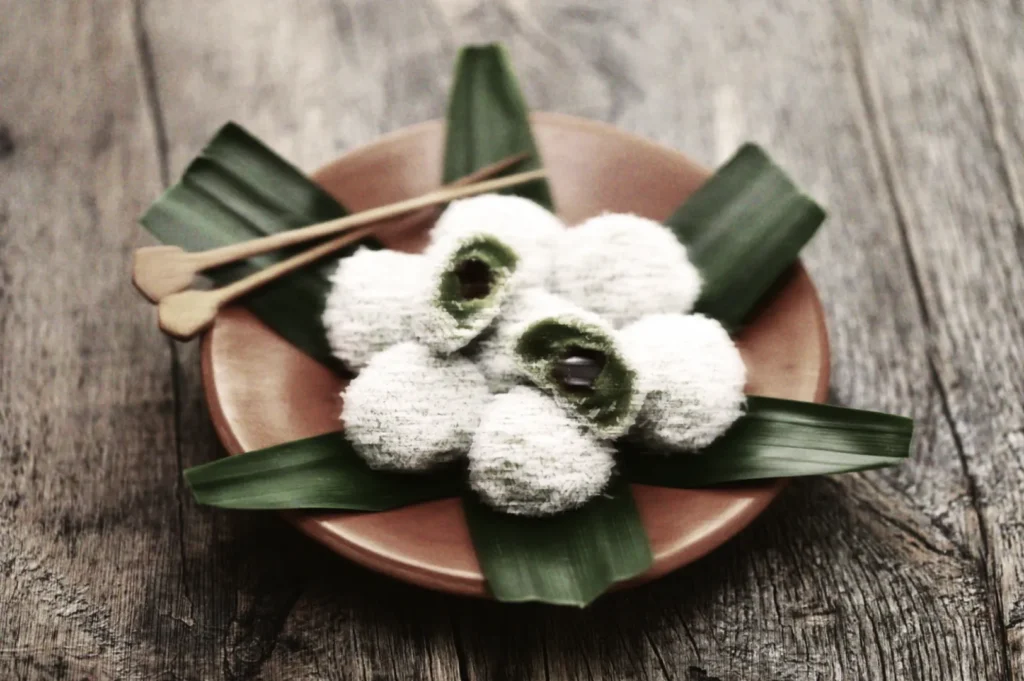
Some days, she brought out a small plate of kuih. Soft, green, sticky with coconut. Sometimes a glass of iced barley, the ice already melting.
We’d eat with our fingers, garlic smell and all.
I have eaten better kuih since. From famous stalls, from bakeries with queues.
None of them tasted like the ones on that step.
It wasn’t the recipe. It was the slowness. The quiet. The feeling that the afternoon belonged to us and wasn’t going anywhere.
Years later, I read about the simple practice of paying attention to the present moment, and how noticing small, ordinary details can change the way a day feels.
My grandmother never read any of that.
She just sat on a step and peeled garlic. She already knew.
The Day the Step Was Empty
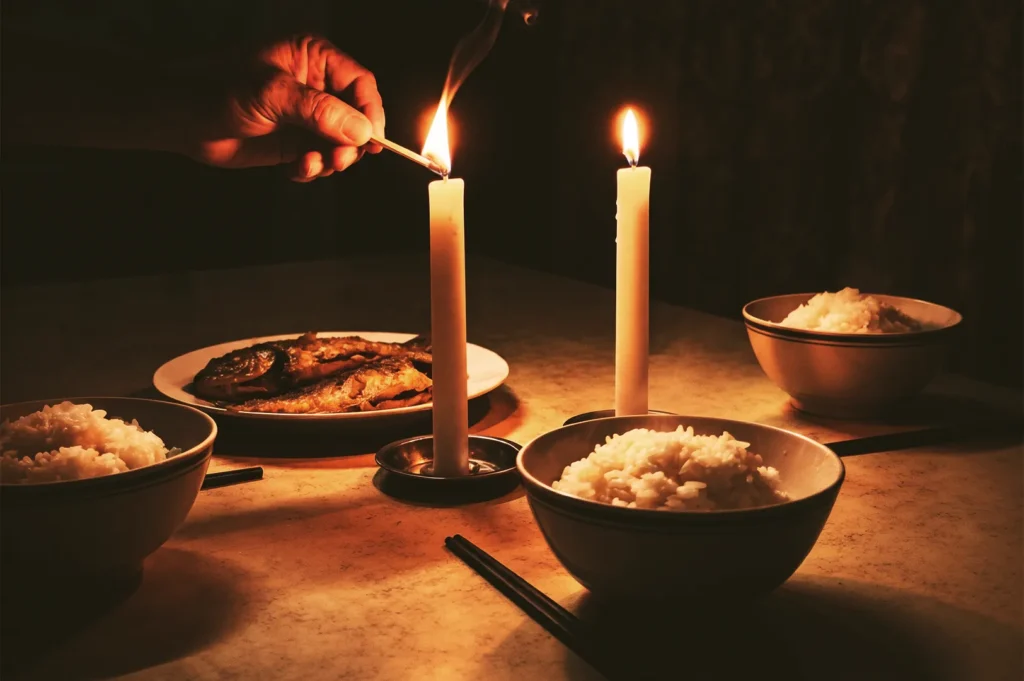
She passed in the rainy season. The house filled with people again. Folding chairs, incense, pots of food no one was hungry for.
On the second afternoon, I slipped out the back door.
The step was wet. A few garlic skins were still caught in the crack at the left edge, grey and flattened by rain.
I sat down anyway.
The alley looked the same. The bicycle was still there, still flat. Somewhere, a radio played. Someone three doors down was frying shallots.
Everything was exactly as it had always been, except her.
I stayed until my trousers were soaked through. No one came looking for me. I think they knew where I was.
Corners We Don’t Notice Until We Do
The house was sold a few years later. I don’t know if the new owners use the back step. I hope someone does.
I think about how many places like that exist. A stairwell where two sisters whispered. A bench behind a shop where an uncle ate lunch alone for thirty years. The end of a kitchen counter where a mother stood to drink her coffee before anyone woke.
We don’t photograph these places. We don’t think they count.
But they hold more of us than the rooms we decorate.
It’s part of why I keep writing about the quiet corners of home where family memories are often kept. Not because they’re beautiful. Because they’re easy to forget until they’re gone.
What I Carry Now

I live in an apartment with no back step. No alley. No cat asleep in the shade.
But some afternoons, around three, I take a bowl and a bag of garlic to the small balcony. I sit on a low stool. I peel.
One clove at a time. Thumbnail under the skin. A small twist.
The skins drift off in the breeze. My fingers smell sharp for the rest of the day.
And for a few minutes, I’m eight again, sitting on cool concrete beside someone who never needed to say she loved me.
She just pushed the bag an inch closer.