The Night My Father Forgot My Name, and What It Taught Me About the Real Meaning of Reminiscence
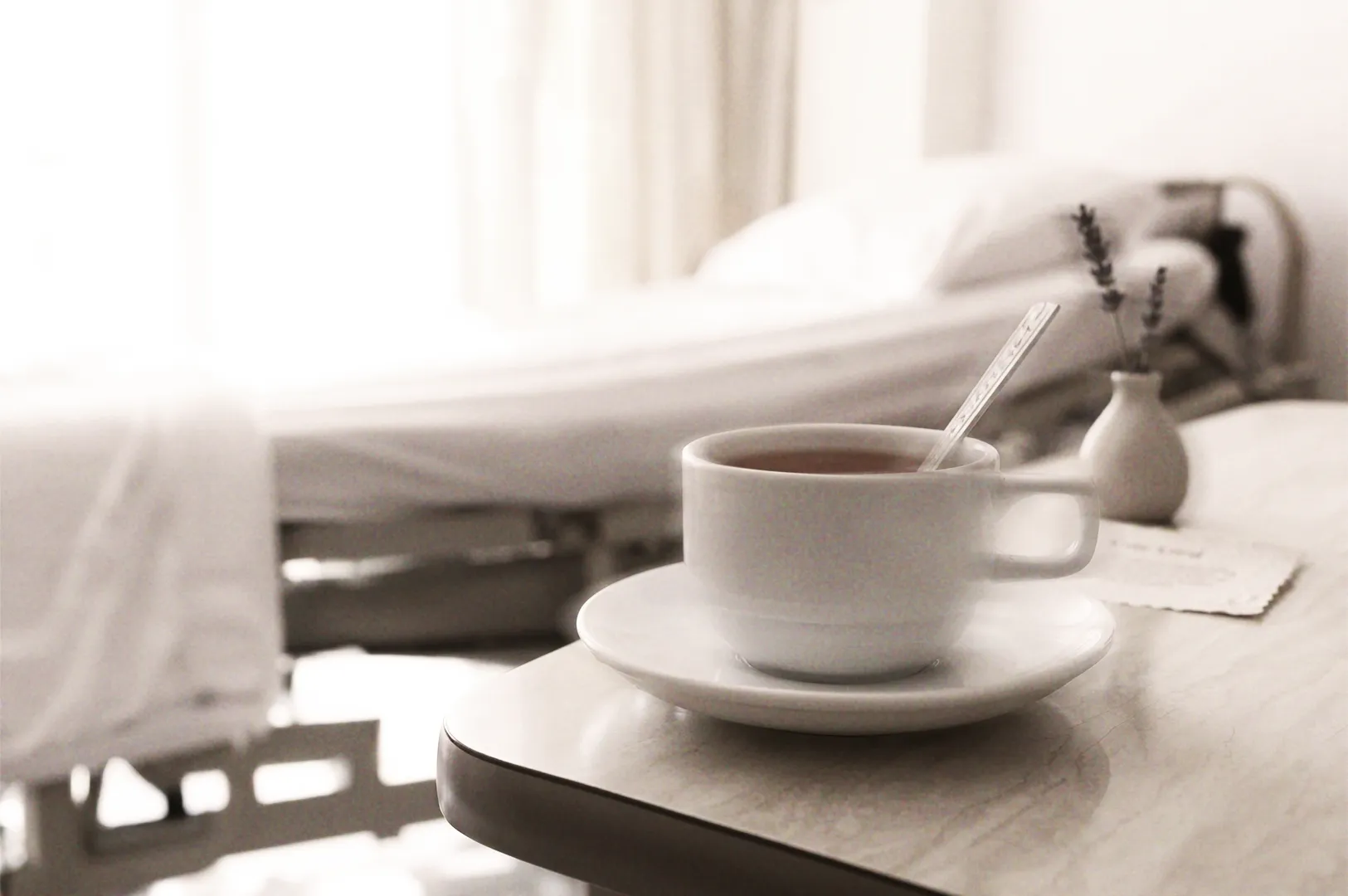
It was a Thursday. The coffee had gone cold in the paper cup, the way it always does in hospital corridors.
My father was sitting by the window, hands folded in his lap. He looked up when I walked in. He smiled politely, the way you smile at a stranger on a train.
“Are you the man from the services?” he asked.
I was his son. I had been his son for forty-one years.
That was the day I began to understand what it means to reminisce. It isn’t a soft, sepia hobby for rainy afternoons. It’s something closer to survival.
Why We Reminisce: The Meaning of Reminiscence Beyond the Dictionary
Look up the word and you’ll find something tidy. To reminisce: to indulge in enjoyable recollection of past events.
Fine. Accurate. But it misses the pulse of the thing.
The meaning of reminiscence, as I’ve come to live it, is this: it is the act of carrying someone forward by walking them back.
When my father’s dementia took hold, the present stopped making sense to him. The future stopped existing. The past remained, like a house where most rooms were locked but a few doors still swung open if you knew where to push.
So I learned to push.
I would sit with him and talk. Not about the weather or the food on his tray, but about the things that lived deep in him. The smell of diesel on the docks where he worked. The first record he ever bought. The girl in the yellow coat who became my mother.
Some days, nothing. Other days, the light came back into his face like someone had opened a curtain.
That is the thrill no one tells you about. A single sentence can bring a whole person back, even if just for an hour. If you’re navigating this yourself, Unrushed Memories is a quiet, honest space built for exactly these kinds of stories.
The Family Members Who Taught Me to Reminisce
Every family has its keepers of story. In ours, it was my grandmother on my father’s side.
She was raised in the South, in a town so small it barely made the map. She moved north to New York after the war with one suitcase and a Bible with her mother’s handwriting in the margins.
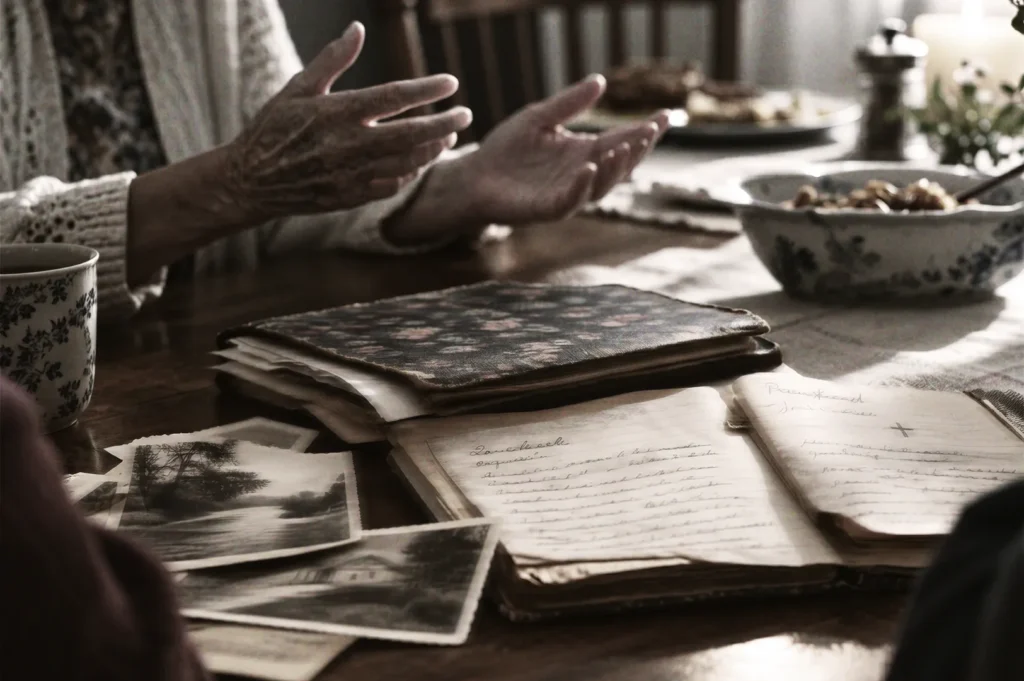
Sunday dinners were her stage. The children would be sent to wash their hands, and by the time we came back, she’d already started.
“Did I ever tell you about the summer the river flooded?”
She had. Many times. We never said so.
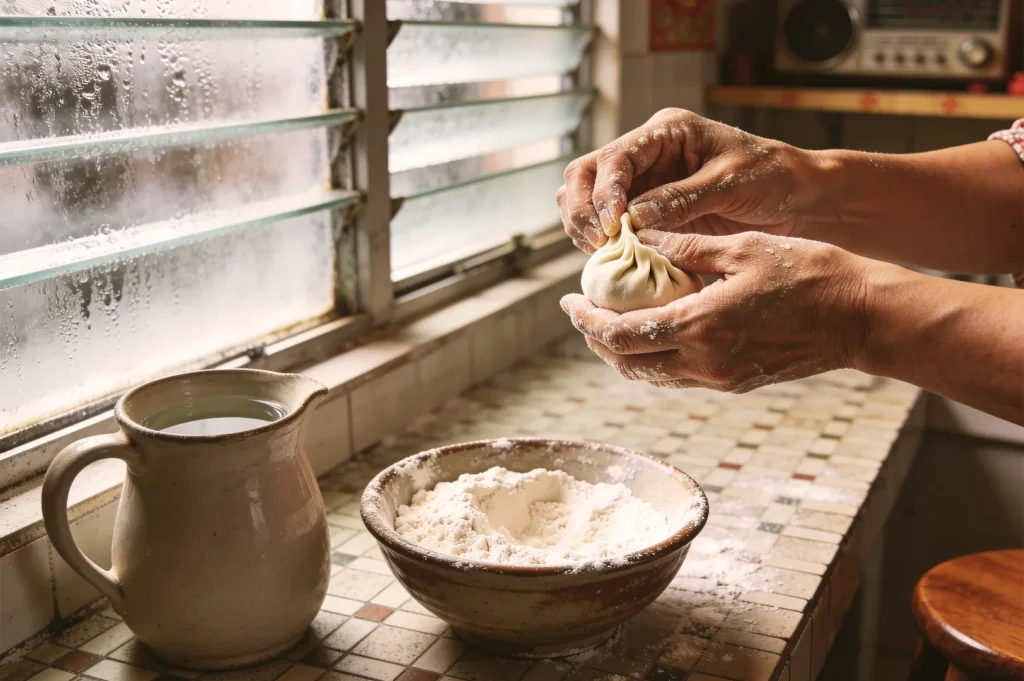
Because the stories weren’t the point. The telling was the point. Her voice rose and fell like old gospel music. Her hands moved as if she was shaping the words out of flour and water.
The family members sitting around that table were each holding a piece of her. My aunt remembered the flood as a tragedy. My uncle remembered it as an adventure. My father, the youngest, remembered only that he’d been allowed to sleep in the barn.
Reminiscences are never one story. They’re a chorus. Each voice carries a different note, and none of them is wrong.
When my grandmother died, we found a series of notebooks under her bed. Pages and pages of recipes, prayers, names of neighbors long gone. Scraps of a life she’d been quietly recording all along.
We didn’t know what to do with them at first. Then my cousin, who works in publishing, suggested we make a family edition. Nothing fancy. A single volume, bound and shared among the members of the family.
It became a project that took two years. It was worth every hour. Researchers have written thoughtfully about why preserving family stories through written memory projects strengthens intergenerational bonds and emotional well-being, and sitting with those notebooks, I felt every word of it.
The Early Days: Where Every Memory Begins
I don’t remember much from my own early days. Most of us don’t. Memory before five or six is patchy at best, more feeling than film.
But I remember this.
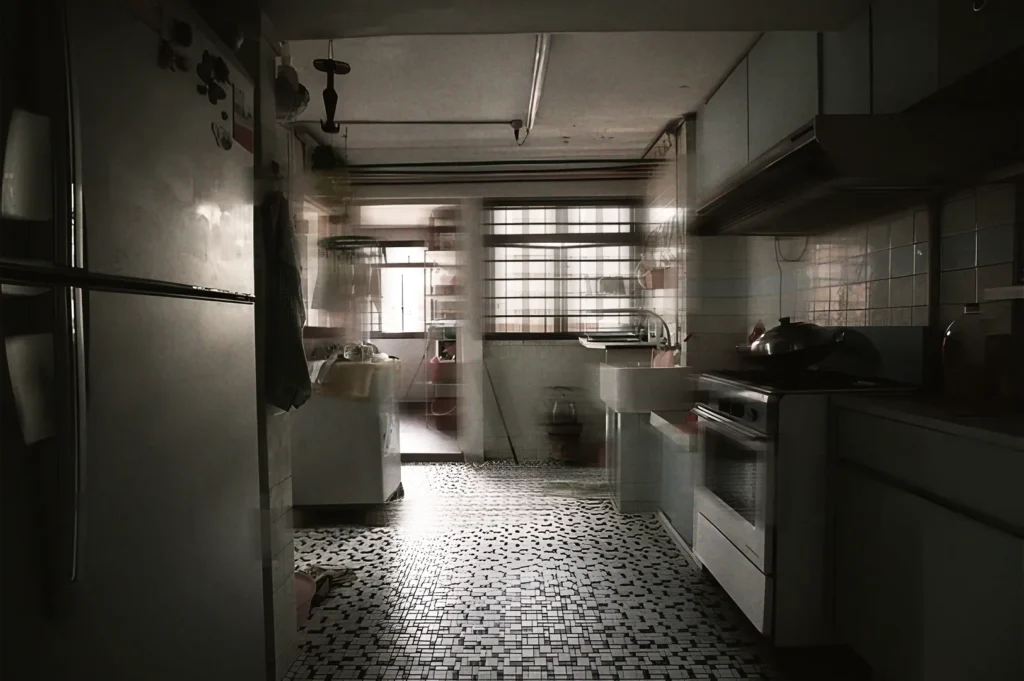
A kitchen with yellow tiles. The radio playing something with horns. My father lifting me onto the counter so I could watch him make eggs. The sizzle. The smell of butter going brown. His big hands cracking shells with one tap.
“Watch now,” he said. “You only get one chance to do it right.”
I don’t know if he meant the eggs or something bigger. I’ve wondered about it for years.
That’s the strange gift of early childhood memories. They arrive without context, so we fill them with meaning. Imagination and recollection blur together. The child remembers the moment. The adult decides what it meant.
Years later, when my father couldn’t remember my name, I made him eggs in the hospital kitchenette. Butter going brown. One tap on the shell.
He watched me the whole time. Then he said, very quietly, “You only get one chance.”
I had to step outside for a minute after that.
School Days and the Friends Who Shaped Who We Became
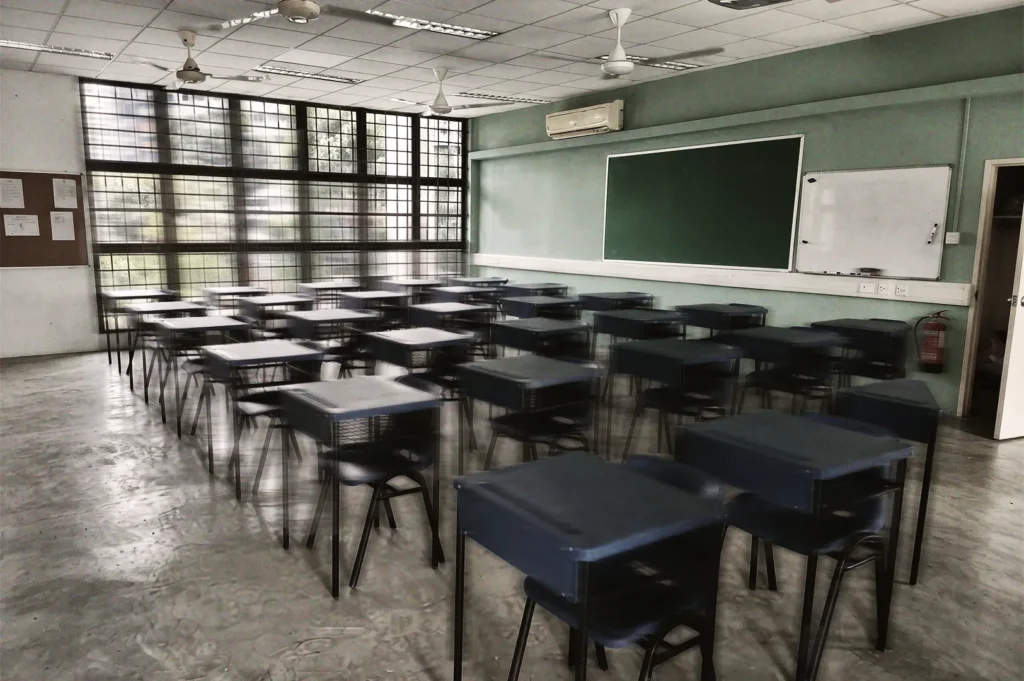
There’s a particular kind of nostalgia reserved for school days. It’s sharper than the rest. Maybe because everything felt so large back then: every friendship, every rejection, every small win.
I spent most of mine in the back row of Mrs. Abernathy’s English class, pretending not to care. She saw right through it.
One day she handed me a battered copy of a novel and said, “Read this. Then come tell me what you notice.”
I read it in two nights. I came back with pages of notes. We talked for an hour after the bell.
That was the day I stopped pretending not to care about words.
Teachers do that. They see who you might become before you do. Mrs. Abernathy passed away a few years ago. I found out through a school alumni website, of all places. A short article, a photo, a list of the students she’d taught who’d gone on to do things.
I wasn’t on the list. It didn’t matter. I knew what she’d given me.
Then there were the friends. Danny, who could play any song by ear on the piano in the music room. Marcus, who wanted to be an actor and dragged all of us to every community theatre production within fifty miles. Priya, who ran a campaign for student council on a platform of better cafeteria food and won by a landslide.
We were loud and foolish and certain we’d stay together forever.
We didn’t, of course. Life scatters people. But when we meet now, once a year if we’re lucky, the years fold up like a paper fan. We’re sixteen again for a few hours, laughing at the same old jokes. There’s even science behind why school-era friendships and the music we loved during those years leave such a lasting emotional imprint on memory — though I suspect most of us already knew that without needing to be told.
That’s what reminiscences do among friends. They let you visit the people you used to be.